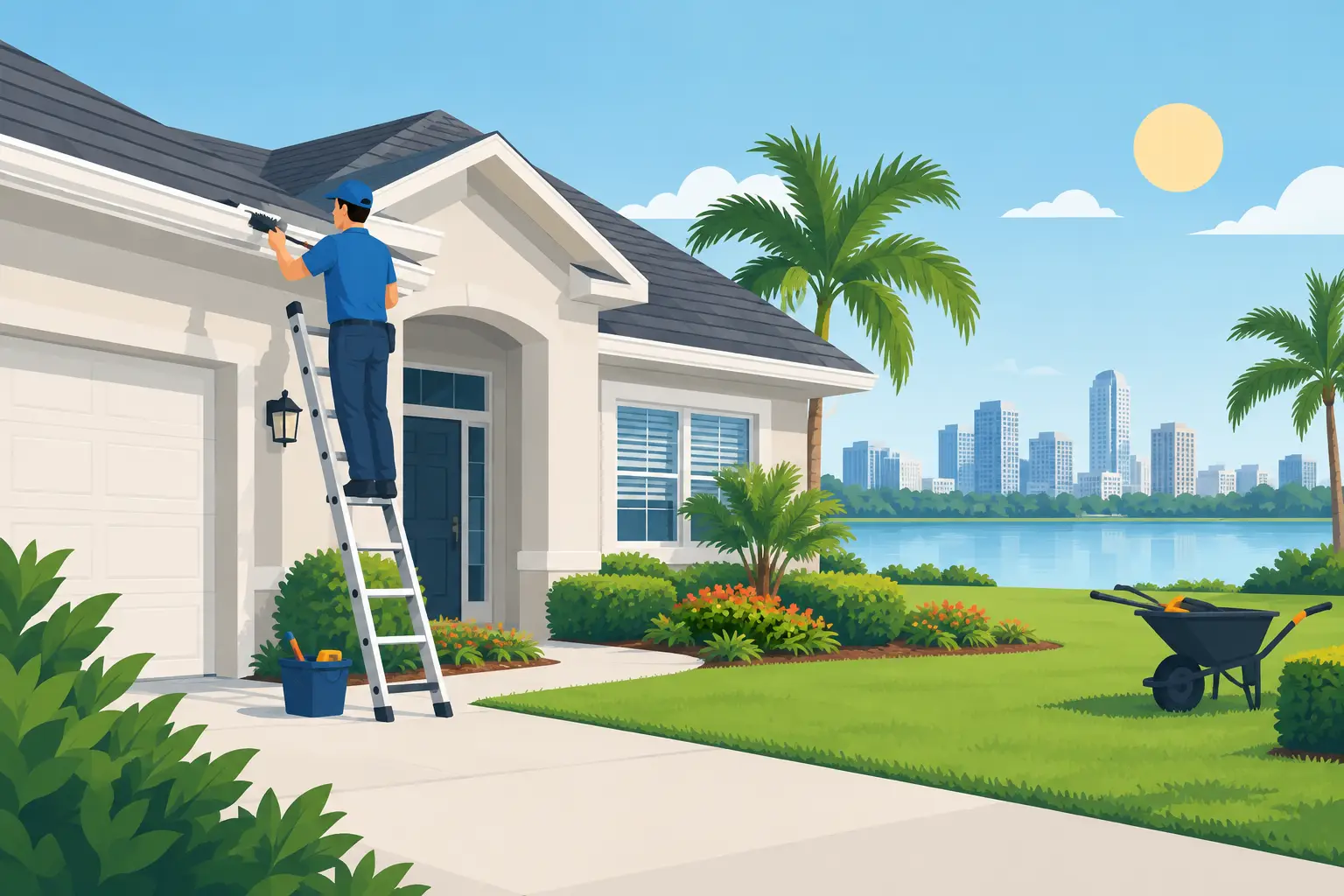
Florida buildup rarely starts as a major problem. A faint green film on the siding, darkened concrete near the garage, or pollen caught in a pool screen can seem cosmetic at first. But exterior maintenance is easier, more predictable, and often less disruptive when it is handled before organic growth, embedded grime, and moisture exposure spread across more surfaces.
For Orlando-area homeowners, the goal is not to clean everything with maximum force. It is to match the cleaning method to the material, confirm exactly what will be cleaned, and avoid paying for work that was never clearly defined. That approach protects both the property and the homeowner from unnecessary risk.
What Exterior Maintenance Covers
Exterior maintenance is the ongoing care of the visible surfaces that face weather, humidity, irrigation overspray, foot traffic, and airborne debris. On a typical Central Florida home, that can include the house exterior, driveway, walkways, pavers, pool deck, pool cage, and screen enclosure.
These surfaces do not age in the same way. Concrete may collect tire marks, rust-colored irrigation staining, and dark organic growth. Painted siding, stucco, soffits, and trim can develop algae streaking but may be damaged by excessive pressure. Pool enclosures collect debris and mildew in frames, screens, and hard-to-reach upper areas. Pavers can hold sand, leaf stains, and growth in joints.
A good maintenance plan recognizes those differences. “Exterior cleaning” is not one interchangeable service, and a quote should not treat it as one. The service scope should identify the requested areas, access conditions, surface type, and any visible conditions that could affect results.
Why Florida Homes Need Regular Attention
Heat and humidity create favorable conditions for algae, mildew, and other organic buildup. Shade, irrigation, nearby trees, roof runoff, and limited airflow can make one side of a home look noticeably different from the other. A north-facing wall or enclosed patio may need attention sooner than a sunny driveway.
The practical reason to schedule cleaning is not simply curb appeal, although that matters. Buildup can make concrete and pool-deck areas look neglected, reduce the usability of outdoor spaces, and make it harder to spot developing issues such as drainage stains, cracked areas, or worn coatings. Regular care also avoids the pressure to solve months or years of accumulation in one aggressive visit.
There is no single interval that works for every property. Many homeowners assess major exterior surfaces every six to twelve months, while shaded homes, properties with heavy tree cover, and frequently used pool areas may need more frequent service. The right timing depends on what is visible, how quickly buildup returns, and which surfaces matter most to your daily use of the property.
Clean for Conditions, Not Just the Calendar
A calendar reminder can be useful, but the property should lead the decision. Look for green or black staining on walls and concrete, slippery-feeling areas around the pool, dark screen frames, accumulated debris in enclosure corners, and uneven color across pavers or walkways.
If only the driveway has visible buildup, it may make sense to clean the driveway rather than bundle unrelated services. If the pool enclosure and deck are the issue, the house wash may not be necessary. Modular service selection keeps the work focused and the price easier to understand.
Choosing the Right Cleaning Method
The most common mistake in exterior maintenance is assuming higher pressure produces a better result. On some hard surfaces, controlled pressure washing is appropriate. On others, a lower-pressure soft washing process with surface-appropriate cleaning solutions is the safer choice.
Concrete driveways and many walkways can usually tolerate a more direct cleaning approach, subject to their condition. Even then, results may vary around permanent discoloration, rust, oil penetration, old paint, or surface deterioration. Cleaning removes buildup, but it does not repair concrete or guarantee that every embedded stain will disappear.
House exteriors need more caution. Stucco, painted surfaces, trim, soffits, and certain exterior finishes can be affected by high-pressure application. A soft washing approach is generally intended to treat and rinse organic growth without forcing water into vulnerable areas or stripping finish from the surface.
Pool decks and pavers require their own evaluation. Some deck coatings, older pavers, loose joint sand, cracked areas, and delicate finishes can affect the method and expected outcome. A professional should ask about the surface, inspect the visible condition where possible, and confirm what is included before scheduling. This is especially relevant when a property has prior sealing, flaking coatings, repairs, or drainage issues.
Cleaning and Sealing Are Different Services
Paver cleaning is often confused with paver sealing. They are not the same service, and they should not automatically be sold together. Cleaning can remove surface buildup and improve the appearance of pavers, while sealing is a separate material treatment with its own preparation requirements, product choices, maintenance needs, and failure risks.
A homeowner should be able to request cleaning without being pressured into a sealing package. If sealing is being considered, it deserves a separate conversation about the existing surface, prior products, joint condition, and desired finish.
Scope Confirmation Prevents Avoidable Surprises
The clearest exterior maintenance experience starts before anyone arrives. A useful quote identifies whether the work covers the front only, the full exterior, a driveway and sidewalk, a pool deck, the interior and exterior of a screen enclosure where accessible, or another defined combination.
Access matters as much as the list of surfaces. Gates may need to be unlocked. Pets should be secured. Vehicles, furniture, grills, planters, and personal items may need to be moved or protected. Water access, parking, property layout, and screen-enclosure height can all affect how work is performed.
For commercial sites, the need for review is even greater. Building access, pedestrian traffic, operating hours, drainage, surface area, and the requested cleaning zones can vary widely. Property-specific pricing and scope confirmation are more reliable than applying a residential-style package to a site that has different operational needs.
A defined scope also creates reasonable expectations. Exterior cleaning can substantially improve surfaces affected by ordinary dirt and organic growth, but no responsible provider should promise identical results on every stain or every material. Long-standing discoloration, oxidation, etching, paint failure, rust, oil, and surface damage may remain visible after cleaning.
A Straightforward Way to Plan the Work
Homeowners do not need to become cleaning-method experts. They do need enough information to choose the requested areas and confirm the plan. A practical booking process has three parts.
First, provide the property address and the surfaces you want cleaned. Photos can help when there are unusual stains, a large pool enclosure, extensive pavers, restricted access, or a question about the material.
Second, review the proposed scope with a real person. Confirm the service tier or custom quote, what is and is not included, any access requirements, and the payment terms. This is the point to raise concerns about delicate surfaces, prior coatings, irrigation stains, or areas that may require separate treatment.
Third, prepare the property for the scheduled service and pay the remaining balance after the work is completed. This payment timing creates less upfront risk than full prepayment and gives the homeowner a clear point to review the completed scope. Reservation terms should still be stated plainly, including any refundable amount and the conditions that apply.
Build Maintenance Around the Areas You Use
A clean exterior is most useful when it supports how the home is actually lived in. For one household, that means a presentable driveway and entry before guests arrive. For another, it means keeping the pool deck and screen enclosure comfortable for weekend use. A rental or commercial property may prioritize visible approaches, walkways, and tenant-facing areas.
That is why CurbLuma uses defined service tiers alongside human scope confirmation rather than treating every property as identical. The right plan may be a single targeted cleaning now, followed by an assessment later, not an oversized package of services you did not request.
The best next step is simple: walk the property after a dry day, note the surfaces that have changed, and request service based on what you can actually see and use. Clear scope, appropriate methods, and payment after completed work make exterior care easier to manage without turning a routine cleaning into a guessing game.