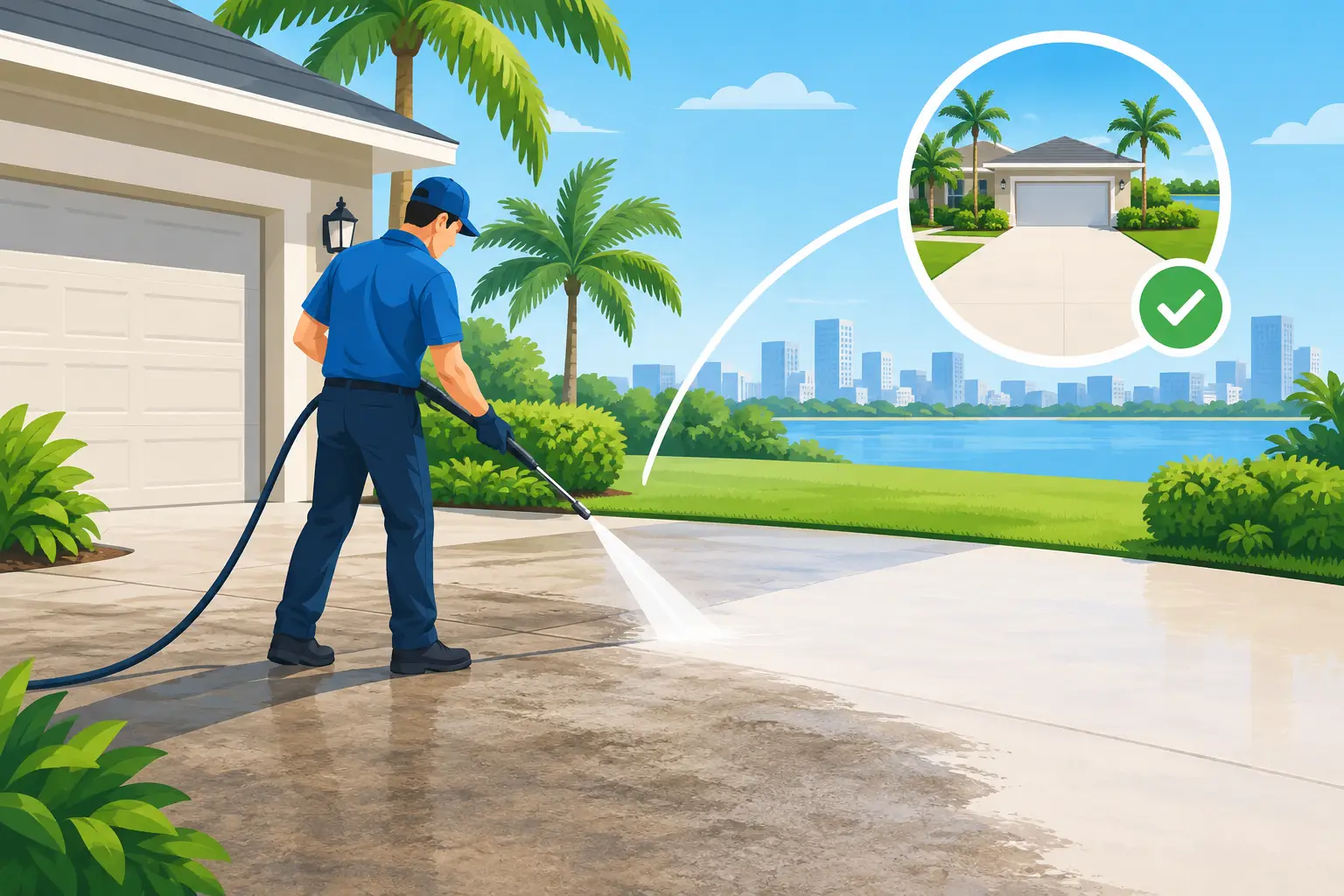
A driveway can look older than the home around it long before the concrete has a structural problem. In Central Florida, moisture, shade, irrigation overspray, tire marks, leaf tannins, and organic growth can change the color of a driveway quickly. Effective driveway cleaning Orlando homeowners can rely on is not simply about using more pressure. It starts with identifying the surface, the visible buildup, access conditions, and the work that is actually included.
That distinction matters because a clean result should not come with vague scope, surprise add-ons, or payment pressure before the work is done. A properly coordinated service sets expectations before arrival: which areas are being cleaned, what method fits the material, where the technician can access water, and what conditions may affect the outcome.
Why Orlando Driveways Need Regular Attention
Florida driveways work in a climate that favors visible buildup. Warm temperatures and humidity support algae and mildew, especially along shaded edges, near landscaping, and beside garage doors where water lingers. Concrete is porous, so grime can settle into the surface rather than sitting only on top of it.
Paver driveways have different considerations. Joint sand, uneven settling, older coatings, and delicate edging can all affect the cleaning approach. A paver surface may need a more controlled process than standard concrete, while stained areas may require targeted treatment rather than a uniform pass across the entire driveway.
Regular cleaning is primarily a maintenance decision. It improves curb appeal, helps keep walking and driving surfaces more presentable, and gives homeowners a clearer view of the driveway's actual condition. It does not guarantee that every permanent discoloration, rust mark, oil stain, or etching issue will disappear. A responsible provider should explain that difference before scheduling.
What Driveway Cleaning Orlando Service Should Cover
A clear driveway-cleaning scope begins with the surface area. For many homes, that means the main driveway and may also include a walkway, front entry, curb-facing apron, or side pad. Those areas should not be assumed. They should be named and confirmed, particularly when a property has a long drive, circular layout, additional parking pad, or connected paver paths.
The method matters just as much as the square footage. Concrete often responds well to a surface-cleaning process paired with appropriate pretreatment or post-treatment for organic growth. The goal is even cleaning without leaving obvious wand marks or concentrating pressure in one spot. Edges, corners, and transitions near landscaping may require closer manual work.
Oil, rust, fertilizer, paint, and battery-related stains deserve separate discussion. Some respond to specialty treatment, while others have penetrated or chemically changed the surface. Cleaning can reduce their appearance without fully restoring the original color. Promising full removal before seeing the condition is not a useful standard for the homeowner or the service provider.
A defined scope should also state what is not included. For example, paver sealing is a separate preservation service, not something that should be quietly bundled into a published cleaning price. The same is true of crack repair, joint-sand replacement, stain restoration, and major surface repairs. Modular services make it easier to choose the work you need without paying for work you did not request.
Pressure Washing Is Not One Setting for Every Surface
“Pressure washing” is a familiar term, but the right process depends on the surface and surrounding property conditions. Higher-pressure mechanical cleaning may be appropriate for durable concrete when handled correctly. Pavers, older surfaces, decorative concrete, and areas near sensitive landscaping may require a different combination of water flow, cleaning solutions, dwell time, and controlled pressure.
This is why the lowest advertised price is not always the most useful comparison. A quote should account for material type, buildup level, layout, access, and requested areas. A small rectangular concrete driveway with open access is not the same job as a large paver driveway wrapping around a landscaped entry.
The trade-off is straightforward: broad pricing ranges can feel quick, but they often leave key conditions unresolved. A confirmed scope takes a little more coordination upfront and reduces the chance that the team arrives with different assumptions than the customer.
Three Details to Confirm Before Booking
1. The areas you want cleaned
Share the driveway layout and any connected areas that matter to you, such as the front walk, porch, sidewalk, or curb apron. Photos can help show surface type, staining, gates, parked vehicles, and landscaping near the work area. If a separate section is not part of the confirmed scope, do not assume it will be cleaned during the visit.
2. Surface condition and property access
Let the provider know whether the driveway is concrete, pavers, coated concrete, or a mix of materials. Mention visible oil or rust staining, loose pavers, damaged edges, active construction, standing water, or prior coatings when known. Access details also matter: available water, gate entry, vehicle removal, pets, and any community rules that affect arrival or work hours.
3. Price and payment timing
A professional service should make pricing understandable before the appointment is finalized. Published tiers can provide a useful starting point, but the final service scope should reflect the actual property. For homeowners, payment timing is part of the decision as well. Paying the remaining balance after completed work creates less upfront risk than paying the full amount before anyone has reviewed the finished driveway.
CurbLuma uses human scope confirmation and address verification to make sure the requested service, coverage area, and property conditions are aligned before work is scheduled. That process is designed to prevent the common problems of generic estimates and unclear day-of-service changes.
Preparing Your Driveway for Cleaning Day
Preparation is simple but useful. Move vehicles off the driveway and clear portable items such as planters, sports equipment, bins, and decorative pieces. Keep garage doors and windows closed, and identify any outdoor electrical concerns or fragile items near the cleaning area.
If you have a pool, screen enclosure, or nearby exterior surfaces that also need attention, mention them when requesting service rather than adding them at arrival. They may require different cleaning methods and a separate confirmed scope. Combining work can be convenient, but only if the service plan and pricing reflect each surface clearly.
It is also reasonable to ask what you should expect immediately after cleaning. Some surfaces may remain damp for a period, and stubborn discoloration can look different as the driveway dries. A technician should be able to explain any visible limitations tied to embedded stains, surface wear, or prior damage.
How Often Should a Driveway Be Cleaned?
There is no single schedule for every Orlando property. Many homeowners consider driveway cleaning annually or when organic buildup becomes visible, but shaded homes, tree-heavy lots, irrigation exposure, and frequent vehicle use can require more frequent attention. Bright, open driveways with limited moisture exposure may stay presentable longer.
The practical trigger is not a calendar reminder alone. Look for darkened traffic areas, green or black growth near edges, noticeable color contrast between the driveway and walkway, or buildup that makes the property look neglected. Cleaning before staining and growth become heavily established can make ongoing maintenance more manageable.
For pavers, avoid treating cleaning as a substitute for addressing underlying movement, drainage, or deteriorating joint conditions. If the surface has structural issues, cleaning may improve appearance while leaving the underlying repair need unchanged.
A clean driveway should feel like a straightforward property-maintenance decision, not a sales event. Confirm the areas, ask how the surface will be handled, understand the price, and choose a provider that is comfortable defining the limits of the work. That approach leaves you with a better basis for approving the service and a clearer expectation when the driveway is dry.