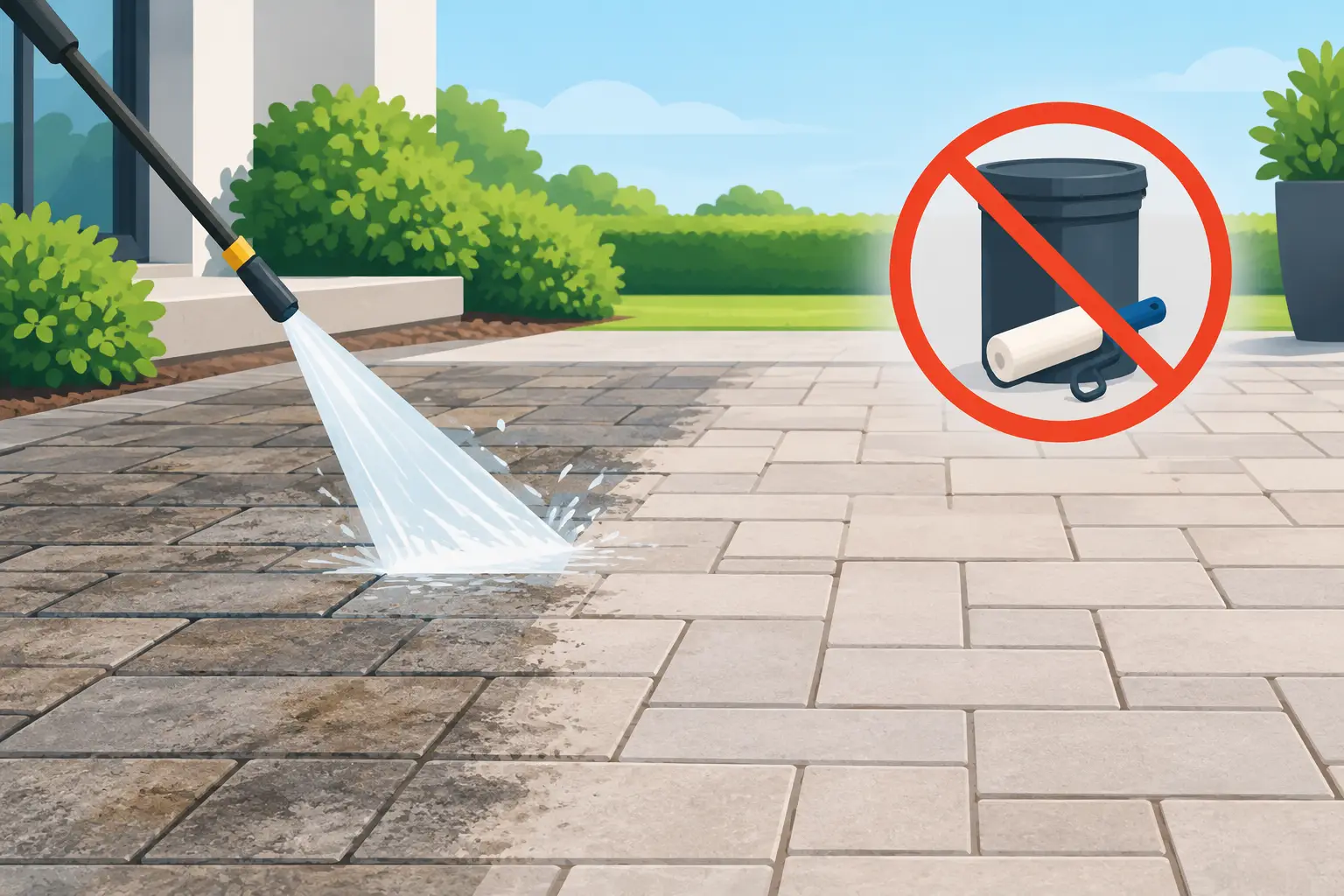
A paver driveway can look dramatically better after a proper cleaning, especially after Florida humidity has left behind algae, mildew, dirt, and dark organic staining. But does paver cleaning require sealing afterward? In most cases, no. Cleaning and sealing are separate services with different purposes, and a clean paver surface is not automatically a surface that needs a sealer.
That distinction matters because sealing is often presented as the expected next step, even when the condition of the pavers does not justify it. A practical plan starts with the actual surface: its age, drainage, joint condition, prior coatings, and the result you want from the space. Cleaning may be all that is needed. In other situations, sealing can be a reasonable optional investment after the surface has been properly prepared and allowed to dry.
Paver Cleaning and Sealing Do Different Jobs
Paver cleaning removes surface buildup. Depending on the area and condition, that can include algae, mildew, embedded soil, leaf tannins, tire marks, and general grime. The correct cleaning approach should account for the paver material, surrounding landscaping, nearby pool features, and the condition of the joint sand. The goal is a cleaner, more usable surface without treating every stain or every property as identical.
Sealing applies a protective or appearance-enhancing coating after cleaning. Some sealers may deepen color, create a wet-look finish, reduce the absorption of certain spills, or help stabilize joint sand when paired with the appropriate sanding process. Those are potential benefits, not automatic requirements.
A clean driveway is not unfinished just because it has not been sealed. Many homeowners prefer the natural appearance of unsealed pavers and maintain them through periodic cleaning, weed control, drainage correction, and spot attention as needed. Others want a richer color or added stain resistance in a high-use patio or driveway. Both approaches can be appropriate.
When Paver Cleaning Does Not Require Sealing
Sealing is usually optional when the pavers are structurally sound, have acceptable color, and are primarily dealing with surface-level organic buildup. This is common around Orlando homes where shade, irrigation overspray, and humid conditions encourage green or black growth on driveways, walkways, patios, and pool areas.
If your main goal is to remove visible grime and restore a cleaner appearance, professional cleaning may meet that goal on its own. It can also be the more sensible choice when you are preparing for guests, listing a home, completing routine property maintenance, or simply addressing a slippery surface before the rainy season.
Newer pavers may not need sealing right away either. Giving the installation time to settle and confirming that drainage and joint conditions are performing as intended can prevent premature decisions. The right timing depends on the installation, the paver product, and local conditions, not a fixed rule that applies to every property.
Cleaning without sealing can also make sense when you are uncertain about the finish you want. Once a gloss or color-enhancing sealer is applied, changing that appearance later can require stripping or extensive corrective work. It is better to make that choice deliberately than to treat it as a required add-on after a cleaning appointment.
When Sealing May Be Worth Considering After Cleaning
Paver sealing may be worth considering if you want a specific visual finish or if a surface faces recurring exposure that makes maintenance more demanding. A driveway with regular vehicle use, a patio under heavy tree cover, or an outdoor kitchen area exposed to food and drink spills may be candidates for a carefully selected sealer.
The condition of the joints matters as well. Pavers rely on joint material and edge restraint to remain stable. If sand has washed out, weeds are repeatedly emerging, or individual pavers are moving, cleaning alone does not correct the underlying issue. The surface may need re-sanding, targeted repairs, or drainage review before sealing is even considered.
Sealing can also be a choice for homeowners who want enhanced color. Over time, sun exposure and weather can leave pavers looking faded or uneven. A color-enhancing sealer may improve the appearance, but it will not repair chipped pavers, correct settling, or solve discoloration caused by ongoing moisture. A clear understanding of those boundaries helps avoid disappointment.
Why the Order and Timing Matter
If sealing is part of your plan, cleaning should happen first. Sealing over algae, embedded dirt, lingering chemical residue, or moisture can lock in the very problems you hoped to remove. The surface needs to be cleaned thoroughly, any necessary repairs need to be addressed, and the pavers need adequate drying time before a sealer is applied.
Drying time is not a minor detail in Central Florida. Afternoon rain, high humidity, shaded sections, and moisture retained below the surface can all affect whether pavers are ready for sealing. A patio may appear dry at the surface while joints or low areas still hold moisture. Applying sealer too soon can lead to whitening, hazing, adhesion problems, or an uneven finish.
Previous sealers add another layer of complexity. If pavers have a failing, cloudy, peeling, or uneven coating, a new product may not bond correctly without surface preparation or stripping. This is one reason a blanket recommendation is risky. The best next step depends on what is already on the surface and how it is performing.
Common Assumptions That Lead to Unnecessary Work
One common assumption is that pressure washing always removes all joint sand. Careful surface-specific cleaning can reduce unnecessary disruption, but some loss may occur, particularly where joints were already low or weak. That does not mean every cleaned driveway needs a full sealing package. It means the joint condition should be reviewed after cleaning and any needed follow-up should be clearly defined.
Another assumption is that sealer permanently prevents algae or stains. It does not. Florida moisture, shade, pollen, landscaping debris, and irrigation can still create conditions for organic growth. A sealed surface still needs regular observation and maintenance. Sealer may change how a surface looks and responds to some contaminants, but it is not a substitute for drainage, routine cleaning, or keeping sprinklers from constantly wetting the same area.
Homeowners also sometimes assume the shinier finish is the more protective one. Not necessarily. Gloss level, traction, material compatibility, UV resistance, and breathability all matter. A highly glossy product may not suit a pool deck or a shaded walkway where slip resistance is a concern. The best finish is the one that fits the surface, its use, and the homeowner's expectations.
A Clear Way to Plan Paver Maintenance
Start with cleaning as its own decision. Identify what you want removed, whether there are areas of heavy staining, and whether the pavers show signs of movement, lost joint material, previous coating failure, or drainage issues. This defines a realistic cleaning scope instead of attaching services that may not be needed.
After cleaning, evaluate the actual result. Some pavers regain enough color and consistency that sealing no longer feels necessary. If you still want added color enhancement, a particular finish, or another sealer-related benefit, you can consider it with a cleaner view of the surface and fewer assumptions.
For homeowners who prefer a straightforward service process, CurbLuma keeps paver cleaning separate from sealing rather than building unnecessary sealing into a published cleaning price. The cleaning scope, property access, and surface condition can be confirmed before service, with payment due after completed work. That gives you room to decide whether sealing is truly appropriate rather than treating it as a surprise requirement.
Questions to Ask Before Approving Sealing
Before moving forward, ask what condition the pavers are in now, whether a prior sealer is present, and whether joint sand or repairs are needed first. Ask what appearance the proposed product will create and whether it is appropriate for the location, especially near a pool or on a frequently wet walkway.
You should also understand the preparation requirements. A credible recommendation should account for cleaning, drying conditions, weather timing, and the limits of what sealing can accomplish. If the surface has poor drainage or active irrigation overspray, resolve those causes where possible instead of expecting a coating to overcome them.
Paver cleaning can be a complete maintenance service on its own. If sealing serves a specific purpose for your property, it should be a separate, informed choice made after the pavers are clean, dry, and properly assessed.