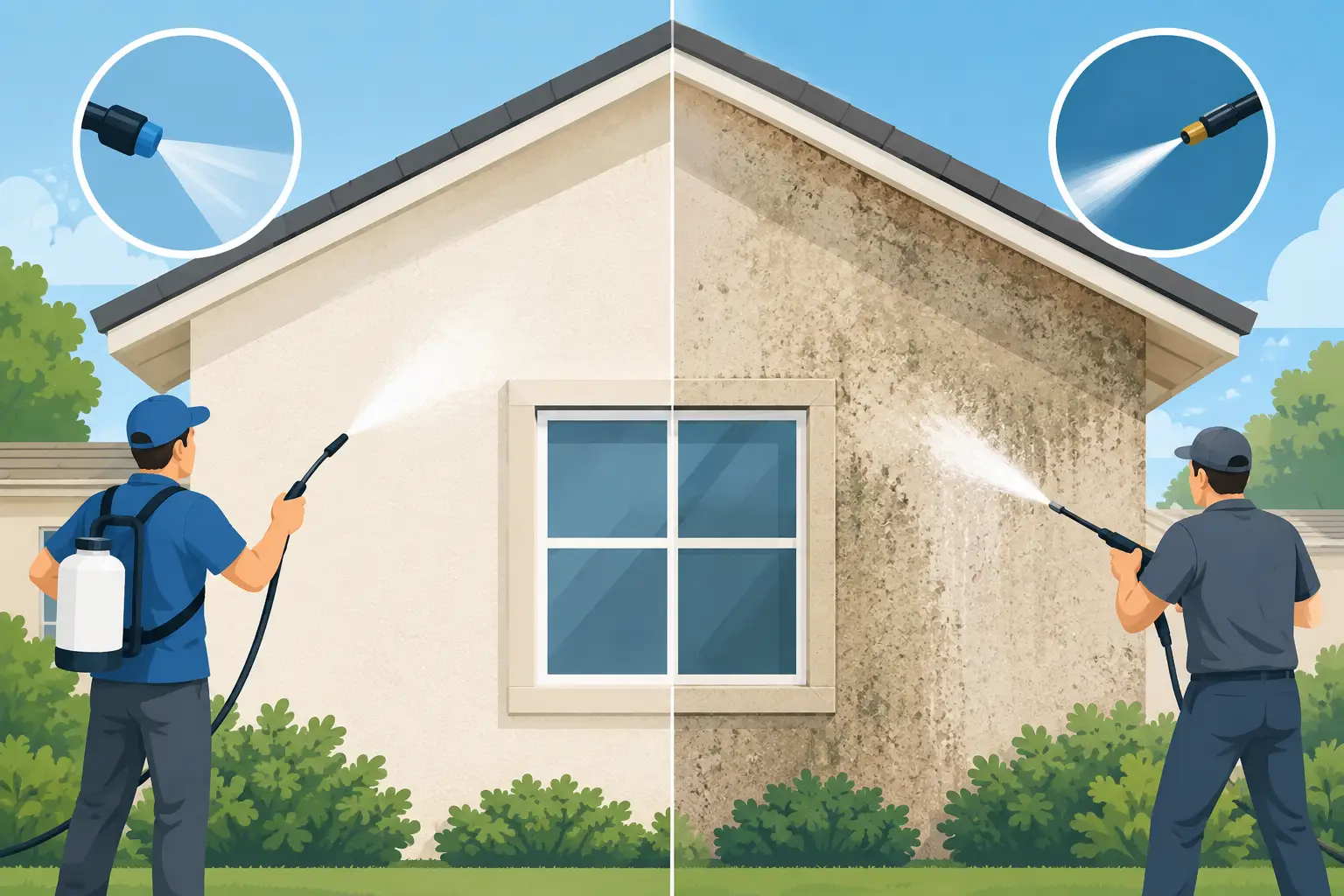
Stucco can look clean one day and noticeably streaked the next, especially after a humid Central Florida season. When considering soft washing vs pressure washing for stucco, the right choice is usually less about which method is stronger and more about which one matches the finish, buildup, repairs, and condition of your exterior.
For most painted or textured stucco homes, controlled soft washing is the safer starting point. Pressure washing still has a role in exterior care, but direct high pressure on stucco can create avoidable problems when the surface is aged, cracked, poorly patched, or already showing signs of paint wear.
Why stucco needs a surface-specific approach
Stucco is not one flat, uniform surface. Its texture has small peaks, valleys, pores, and sometimes hairline cracks that can hold pollen, dirt, algae, mildew, and moisture. In Orlando-area neighborhoods, shaded walls and sides exposed to regular rain often develop dark organic staining faster than sunny, open elevations.
The visible discoloration is not always just loose dirt. Much of it can be organic growth that needs to be treated, not simply blasted away. If a cleaning method removes the surface stain without addressing the growth causing it, the wall may look better briefly but discolor sooner than expected.
Stucco condition also matters. A newer, properly painted exterior can tolerate a different process than an older home with flaking paint, exposed patches, failing caulk, or cracks around windows and trim. Cleaning cannot repair those conditions, and an aggressive method can make them more visible.
Soft washing vs pressure washing for stucco
Soft washing uses low-pressure water with a cleaning solution selected for the type of buildup present. The solution is applied carefully, given appropriate contact time, and rinsed at low pressure. The goal is to loosen and treat organic staining without forcing water into vulnerable areas or damaging the textured finish.
Pressure washing uses water delivered at a much higher force. It is highly effective for durable hard surfaces such as concrete driveways, many pool decks, and certain pavers when the pressure, nozzle, and technique are selected correctly. On stucco, however, high pressure can be too aggressive if used directly or without careful adjustment.
The practical distinction is straightforward: soft washing relies primarily on treatment, while pressure washing relies primarily on force. For a typical residential stucco wall with algae or mildew staining, treatment is usually the better tool.
When soft washing is usually the better choice
Soft washing is commonly appropriate for painted stucco, textured finishes, exterior walls near windows, and areas with organic growth. It can clean recessed texture more evenly than a narrow pressure stream, which may leave striping or miss stained valleys in the finish.
It also reduces the chance of etching the surface, stripping weak paint, disturbing old repairs, or driving water behind cracks and around penetrations. Low pressure does not mean no care is required. Solution strength, plant protection, rinse control, and runoff management still need to be handled correctly.
A qualified cleaning professional should adjust the process for the surface rather than apply one standard mix or dwell time to every property. Heavy buildup may require a more deliberate treatment process, while a lightly soiled wall may need less product and a gentler rinse.
When pressure washing may have a limited role
Pressure washing is not automatically wrong around a stucco home. It is often useful for adjacent concrete, walkways, driveways, curbs, and other durable exterior surfaces. Those areas can collect tire marks, embedded grime, leaf tannins, and algae that low-pressure washing alone may not remove effectively.
There are limited stucco situations where a trained technician may use carefully reduced pressure, a wider spray pattern, and greater working distance as part of the process. That is not the same as treating stucco like concrete. The technician should first assess the paint condition, finish texture, cracks, patching, access, and nearby openings.
If a wall has loose paint, crumbling sections, active cracking, damaged caulk, or signs that water has been getting behind the finish, cleaning should be approached conservatively. In some cases, exterior repairs should come before washing.
The risks of using too much pressure on stucco
High pressure can leave a stucco wall looking worse than it did before cleaning. The damage is not always dramatic in the moment. It may show up as roughened texture, removed paint, exposed patch areas, water intrusion, or uneven color after the wall dries.
A concentrated stream can also cut through weak coatings and make previously minor defects obvious. That does not necessarily mean cleaning caused every underlying issue, but forceful washing can reveal or worsen a finish that was already compromised.
Another concern is water direction. Spraying upward into soffits, window edges, dryer vents, electrical fixtures, and cracks can push water into places where it does not belong. A responsible exterior-cleaning plan accounts for these details instead of treating every wall as an open target.
How to choose the right method for your home
Start with the material, then consider the condition. A clean-looking but faded painted stucco wall needs a different approach than a heavily stained wall with dense algae on the north side of the property. The presence of landscaping, pool screens, decorative trim, shutters, and nearby electrical components also affects how work should be performed.
Before service is scheduled, a clear scope should identify which walls are included, what type of staining is present, whether there are visible surface concerns, and which nearby areas need protection. Photos can help with an initial review, but address verification and property-specific confirmation are especially useful for homes with multiple elevations, enclosed patios, pool cages, or difficult access.
Be cautious with blanket promises such as “every stain removed” or “any surface cleaned.” Some discoloration may be permanent oxidation, paint failure, rust, irrigation staining, or embedded mineral deposits rather than removable organic buildup. A defined service scope sets realistic expectations before work begins.
What a professional stucco cleaning process should include
The best process is controlled rather than dramatic. First, the exterior is reviewed for obvious cracks, loose paint, sensitive fixtures, landscaping, and access restrictions. A technician should know where water can drain, where it should not collect, and which adjacent surfaces require a different cleaning method.
Next comes preparation. Windows and doors should be closed, pets brought inside, and access cleared around exterior walls. Landscape protection and careful rinsing matter, particularly around ornamental plants and pool areas. If the property has an irrigation system that contributes to staining, that issue may need separate attention after cleaning.
The wall is then treated and rinsed using the method appropriate to its condition. The result should be evaluated after the surface has had time to dry, since stucco can appear darker while wet and may reveal remaining stains or paint inconsistencies only afterward.
For homeowners, the transaction should be just as clear as the cleaning plan. Confirm what is included, what is excluded, how access will work, and when payment is due. CurbLuma coordinates service through defined tiers and human scope confirmation, with the remaining balance due after completed work rather than full payment upfront.
Questions homeowners should ask before booking
Ask whether the company plans to soft wash the stucco or use direct pressure, and ask why that method fits your exterior. A clear answer should reference the surface condition and the type of staining, not just a one-size-fits-all process.
Also ask how landscaping, windows, screens, and electrical fixtures will be handled. If you are combining house washing with driveway, paver, pool deck, or pool cage cleaning, make sure each surface is listed separately. A driveway may need pressure-based cleaning while the stucco walls need low-pressure treatment, even when both services occur during the same visit.
Finally, confirm the scope in writing before the appointment. That protects both the homeowner and the service provider from assumptions about extra walls, detached structures, second-story access, stubborn specialty stains, or areas outside the agreed service tier.
A clean stucco exterior should not come at the expense of the finish you are trying to preserve. Choose a provider that evaluates the wall before choosing the method, confirms the work before arrival, and treats careful surface selection as part of the service - not an optional extra.