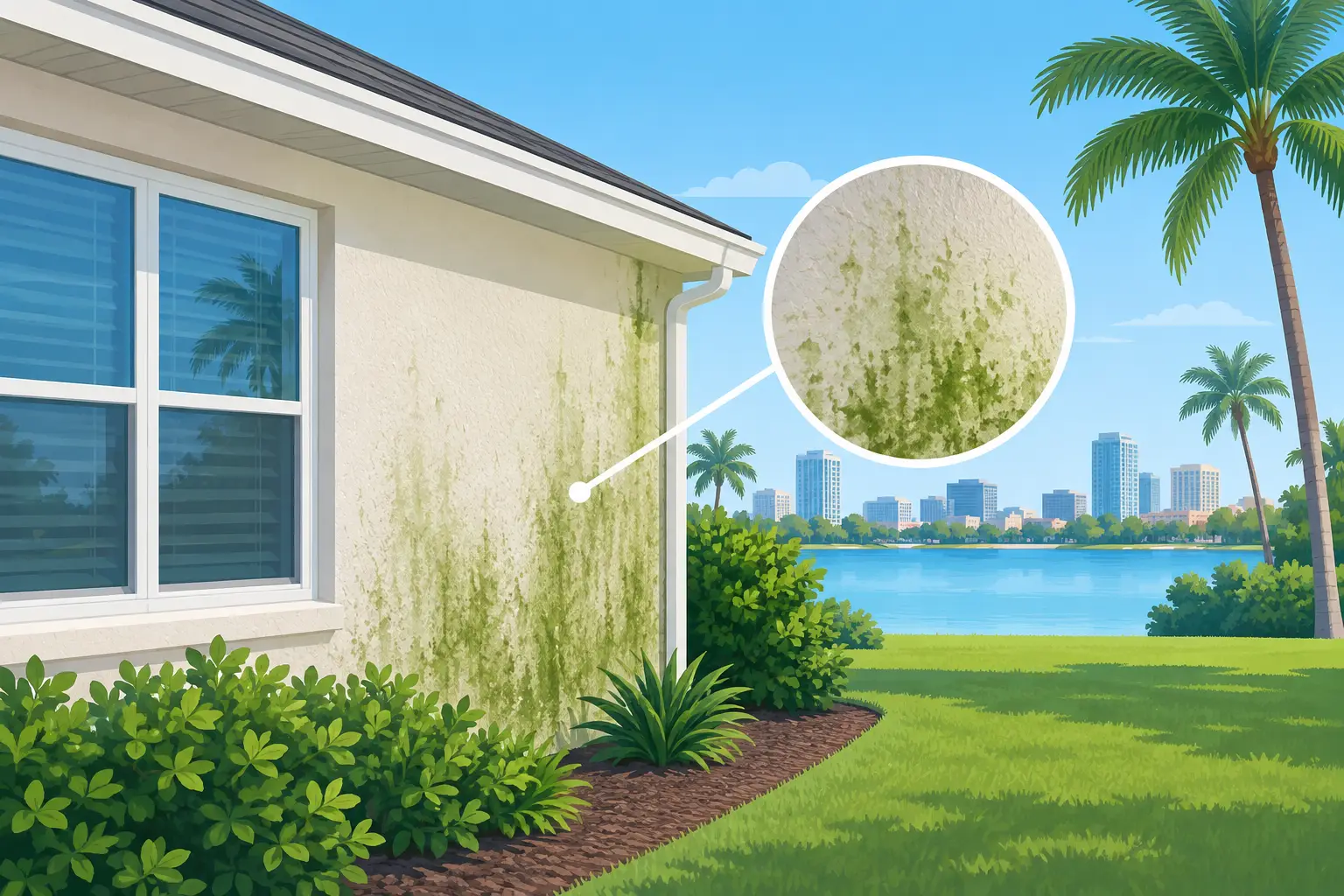
A pale green film on stucco, siding, or trim can make a well-kept home look neglected quickly. If you are asking why do walls turn green, the usual answer is organic growth - most often algae - feeding on moisture, shade, and airborne debris. In Orlando’s warm, humid conditions, that combination is common for much of the year.
The good news is that green exterior walls do not automatically mean the surface is damaged. They do, however, deserve the right kind of attention. The cleaning method, surface material, surrounding landscaping, and severity of buildup all affect what should happen next.
Why Do Walls Turn Green?
Green discoloration on exterior walls is usually algae, although mold, mildew, moss, or staining from nearby materials can sometimes be involved. Algae thrives where water remains on a surface long enough for spores to settle and grow. It may appear as a thin, even haze or as darker green patches concentrated near the bottom of a wall, under rooflines, beside downspouts, or behind dense landscaping.
Florida homes are especially exposed because humidity stays high, afternoon rain is frequent, and shaded surfaces dry slowly. A wall that receives limited direct sun may remain damp for hours after rainfall or irrigation. Dust, pollen, leaf residue, and road grime give organic growth something to hold onto.
This is why a home can look clean on one side and green on another. The issue is rarely about general housekeeping. It is often about the specific conditions around each elevation of the property.
Shade and slow drying are major factors
North-facing walls often show green growth first because they receive less direct sunlight. The same can happen on walls shaded by oak trees, palms, hedges, screen enclosures, neighboring structures, or a covered patio.
Shade itself is not the problem. The issue is that shade slows evaporation. When the exterior stays damp, algae has more opportunity to develop between cleanings.
Irrigation can keep one area wet
Sprinklers that repeatedly hit the side of a home create a reliable moisture source. Even a slight overspray can leave a lower wall damp day after day. Mineral content in irrigation water may also leave pale deposits or spotting alongside green organic growth.
If discoloration is heaviest in a narrow band near landscaping, check the sprinkler pattern before scheduling a cleaning. Redirecting a sprinkler head or adjusting the run time may help the cleaned wall stay cleaner longer.
Gutters, roof runoff, and drainage matter
Overflowing gutters, leaking gutters, missing splash control, and roof runoff can create vertical green streaks or darkened sections beneath the roof edge. These conditions can cause buildup to return quickly after cleaning if the water source is not addressed.
Cleaning removes the visible growth. It does not repair a gutter seam, correct poor drainage, or solve a roof issue. When a wall has repeated staining in one concentrated location, it is worth identifying whether water is being directed there.
Is It Algae, Mold, or Something Else?
Most green wall buildup on exterior stucco, painted surfaces, vinyl, and soffits is algae. It is usually flat, slick when wet, and spread across areas that retain moisture. Mold can be darker and more irregular, while mildew may look gray, black, or powdery white. Moss tends to be thicker and more textured, especially in persistently damp spots.
Color alone is not a perfect diagnosis. Green can also come from oxidized copper, especially below copper gutters, flashing, or decorative features. That type of staining may appear as a more defined drip pattern and generally requires a different cleaning approach than algae.
Paint failure is another possibility. If the green area is paired with peeling, cracking, bubbling, chalking, or soft material underneath, the concern may extend beyond surface growth. Cleaning can improve appearance, but it cannot restore compromised paint or repair water-damaged material.
A professional review should distinguish between removable organic buildup and a condition that needs repair, repainting, or more specialized treatment. This protects the surface and sets realistic expectations before work begins.
Why Pressure Is Not Always the Right Answer
It is understandable to think a green wall needs more pressure. For many exterior walls, that is not the safest choice.
Stucco, painted siding, trim, soffits, window seals, and delicate exterior finishes can be damaged by excessive water pressure or poor technique. High pressure may force water behind siding, scar a painted finish, remove loose paint, or leave visible striping. The result can be a cleaner-looking wall with a more expensive problem underneath.
For typical algae buildup, a surface-appropriate soft washing process is often the better fit. This approach uses a cleaning solution selected for organic growth and controlled, low-pressure application and rinsing. The solution does the primary cleaning work rather than relying on force alone.
The correct method still depends on the surface. A painted masonry wall, vinyl-sided home, older stucco finish, wood feature, and screen enclosure do not all receive the same treatment. Nearby plants, outdoor furniture, electrical fixtures, pool equipment, and access conditions also need to be considered before cleaning begins.
When Green Walls Need Prompt Attention
A light green film is often a maintenance issue, but waiting too long can make cleaning more difficult. Buildup becomes more noticeable, can spread into textured surfaces, and may hold moisture against the exterior. On walkways, pool decks, and other horizontal surfaces, algae can also become slippery.
Prompt attention is especially sensible when you notice growth near entryways, on a pool cage, around windows, beneath gutters, or across a large shaded wall. If you are preparing to sell, hosting guests, or simply trying to keep outdoor areas usable, cleaning earlier usually creates a more controlled scope than waiting for heavy buildup.
There are also situations where cleaning should pause for a closer look. Consider an inspection or repair discussion first if you see active leaking, loose siding, crumbling stucco, extensive peeling paint, rotted wood, or staining that returns immediately after rain. Those signs may point to a moisture-management issue rather than ordinary exterior buildup.
How to Help Walls Stay Cleaner After Service
No exterior cleaning can permanently prevent algae in Central Florida. Rain, humidity, shade, and airborne spores will continue to affect the property. Still, a few practical adjustments can slow the return of green discoloration.
Keep shrubs and tree branches from resting against the home so the wall can dry and air can circulate. Check that sprinklers water landscaping rather than the exterior. Clear gutters and confirm that downspouts send water away from the foundation and wall surface. Remove heavy leaf buildup from corners, ledges, and areas behind patio furniture.
Cleaning frequency depends on exposure, not a fixed calendar. A sunny wall with good drainage may stay clean much longer than a shaded wall beneath mature trees. Many homeowners benefit from reviewing the exterior as buildup becomes visible rather than treating every part of the home as though it ages at the same rate.
What to Confirm Before Scheduling Exterior Wall Cleaning
Exterior cleaning should start with a defined scope, not a vague promise to wash the house. Share the property address, the surfaces you want cleaned, and photos of the green areas when possible. Mention access limits, gated side yards, fragile landscaping, recent painting, known leaks, and any areas of concern.
A clear scope helps determine whether house washing alone is appropriate or whether the driveway, pool deck, pavers, screen enclosure, or other exterior surfaces should be quoted separately. It also helps the cleaning professional choose a method suited to the material instead of applying one approach everywhere.
For homeowners, the practical value is less uncertainty. You should know what surfaces are included, what conditions may affect results, and when payment is due. CurbLuma uses defined service tiers and human scope confirmation so homeowners can confirm the work before service, with the remaining balance paid after completion.
Green walls are common in a humid climate, but they should not become a permanent part of the home’s appearance. Address the moisture pattern, use a surface-safe cleaning method, and keep the service scope clear. That approach protects both curb appeal and the exterior you worked hard to maintain.