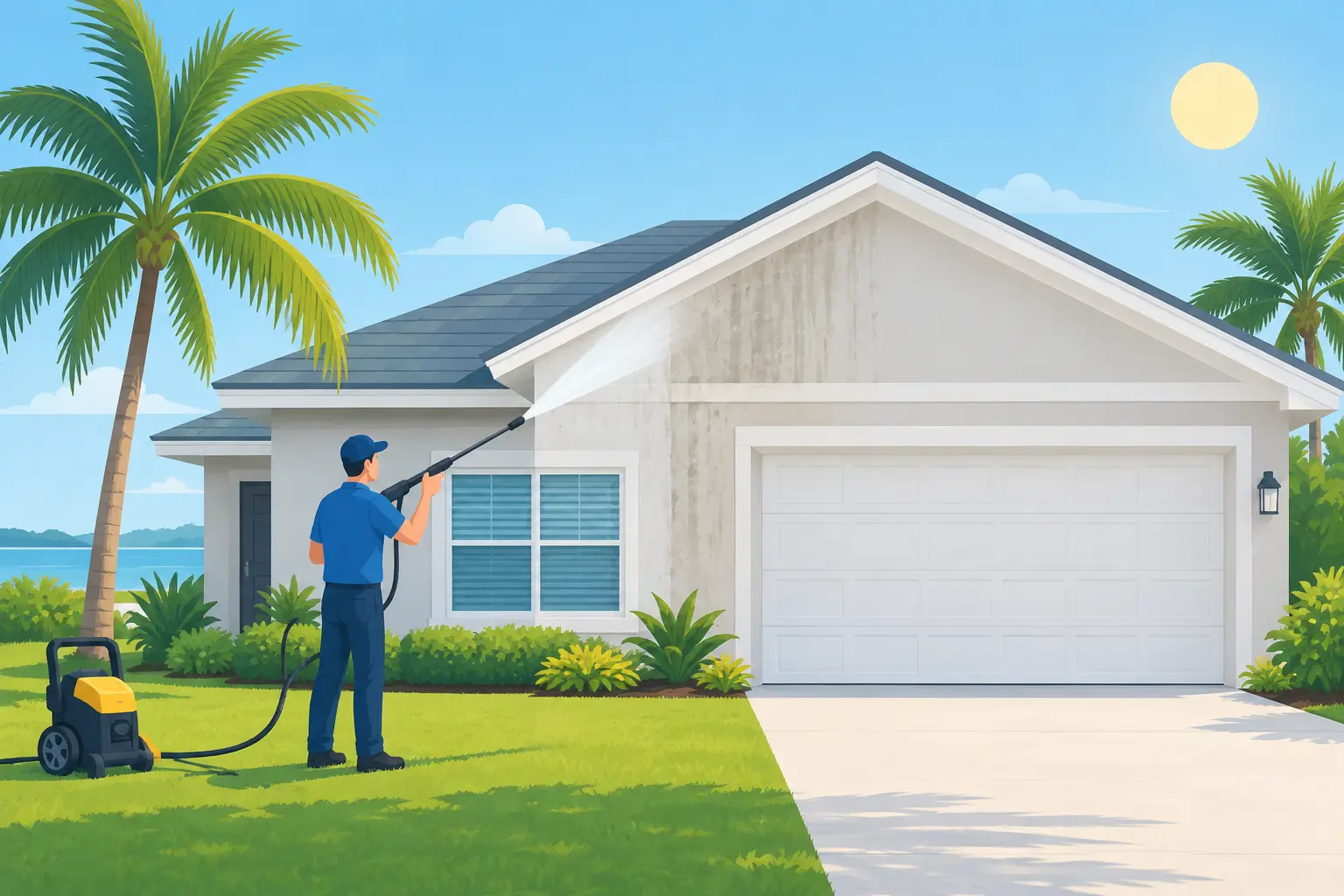
Florida’s exterior buildup rarely announces itself all at once. A light gray film on the stucco, dark spots along the soffits, a slippery pool deck, or a driveway that suddenly looks older than the house are usually the first signs. If you are asking how often should you wash house in Florida, the practical answer is usually once a year, with some surfaces needing attention every six months.
That is a starting point, not a blanket rule. Central Florida humidity, shaded walls, nearby trees, irrigation patterns, roof runoff, and the type of exterior surface all affect the right schedule. A useful cleaning plan protects curb appeal and outdoor usability without paying to clean areas that do not yet need service.
How Often Should You Wash House in Florida?
For most single-family homes in the Orlando area, plan for professional house washing every 12 months. This timing is generally enough to manage ordinary organic growth, dust, pollen, cobwebs, and weather-related grime before staining becomes widespread.
Homes in consistently damp, shaded, or heavily landscaped settings may need house washing every 6 to 9 months. The same can be true for properties near lakes, retention ponds, wooded areas, busy roads, or active construction. These conditions can keep surfaces damp longer or deposit more debris on the exterior.
A home does not need to look severely stained before it is cleaned. Early treatment is usually simpler and helps avoid the uneven appearance that develops when algae and mildew establish themselves across walls, trim, gutters, and entry areas. Still, cleaning more frequently than the property condition requires is not automatically better. The right interval is based on visible buildup and the surface involved.
A practical schedule for Florida exterior surfaces
The home exterior, driveway, pool deck, pavers, and screen enclosure do not age at the same pace. Treating them as one service interval can create either unnecessary work or missed maintenance.
House siding, stucco, painted trim, soffits, and exterior gutters commonly fit a 9- to 12-month schedule. Pool cages and screen enclosures often need cleaning every 6 to 12 months because screens collect pollen, webs, dust, and organic residue quickly. Pool decks may need service every 6 to 9 months if they stay damp, receive frequent foot traffic, or become slick after rain.
Driveways and walkways commonly benefit from cleaning every 9 to 12 months. In shaded areas or where vehicles leak fluids, leaves collect, or sprinkler overspray is frequent, a 6-month interval may be more realistic. Pavers vary more than most surfaces. A paver patio that gets full sun may remain presentable for a year, while a shaded pool surround can show organic growth much sooner.
What Changes the Cleaning Frequency?
The strongest predictor is moisture. In Florida, algae and mildew thrive where water lingers. North-facing walls, areas beneath eaves, shaded side yards, and surfaces near dense shrubs often need cleaning before sunny, open sections of the same home.
Irrigation can be another overlooked factor. Sprinklers that regularly hit walls, fences, driveways, or pavers create repeated wetting and may leave mineral residue. Correcting the sprinkler direction can reduce staining, but it will not remove existing buildup. It can, however, help extend the time between cleanings.
Trees add shade, leaf debris, pollen, sap, and moisture retention. They are valuable landscape features, but they change the maintenance plan. A house surrounded by mature oaks may need selective attention to the shaded elevations, screen enclosure, and concrete long before the entire property requires a full exterior cleaning.
Pool properties have their own pattern. Splash-out, wet bare feet, sunscreen residue, pool equipment runoff, and screened-in humidity can all contribute to a faster buildup cycle around the deck and cage. If a deck feels slippery or looks green in spots, it is time to address it rather than wait for the annual house wash.
Use Surface-Appropriate Cleaning Methods
“Pressure washing” is often used as a catch-all term, but different materials require different methods. A cleaning schedule only works when the approach matches the surface condition and material.
Stucco, painted siding, trim, soffits, and many exterior finishes typically need a controlled soft-washing approach rather than high-pressure cleaning. The goal is to treat and rinse organic buildup without forcing water where it does not belong or damaging paint and finishes. High pressure is not a shortcut for better results on delicate surfaces.
Concrete driveways and many walkways can generally tolerate more direct surface cleaning, but the appropriate pressure, equipment, and treatment still depend on the condition. Pavers require particular care around joint sand, edging, drainage, and any existing coating or sealer. Cleaning pavers does not automatically mean they need sealing afterward. Those are separate decisions, and a clear service scope should keep them separate unless you request both.
Screen enclosures also deserve a measured approach. Screens, framing, fasteners, and pool-area furnishings may require preparation and surface-specific handling. A quick quote based only on square footage can miss these details. Access, enclosure height, furniture, staining, and the condition of the screens all affect what should be included.
Signs You Should Clean Sooner
A calendar is helpful, but the property gives better signals. Consider scheduling before your normal interval when you see several of these conditions:
- Green, black, or gray organic growth on walls, trim, concrete, or pavers
- A slick feeling on pool decks, walkways, or entry paths after rain
- Noticeable streaking beneath gutters, roof edges, or windows
- Heavy cobwebs, pollen, or debris on a pool cage or screen enclosure
- Uneven driveway color that does not improve with normal rinsing
One small stain does not always require a full-property service. Sometimes the right answer is a defined cleaning scope for the driveway, pool deck, enclosure, or affected side of the house. Other times, spot buildup is a sign that the full exterior is approaching its maintenance window. A professional review should distinguish between those situations instead of automatically expanding the job.
Plan Around Florida Weather and Home Use
There is no single perfect season for exterior cleaning in Florida. Spring can be practical after pollen and before summer rains intensify. Fall is also popular because homeowners often want patios, driveways, and pool areas cleaned after the wettest months. But if algae is building up in July or the pool deck is slippery in January, waiting for a preferred season does not add value.
It is reasonable to schedule around outdoor gatherings, listing a home for sale, holidays, or the start of pool season. Just allow for realistic conditions. Rain can affect scheduling and drying, and active storms may require rescheduling for safety. A confirmed appointment should account for access, water availability, gates, pets, furnishings, and the specific areas being cleaned.
For Orlando homeowners, an annual exterior review is often more useful than committing every surface to the same fixed cycle. Walk the property after the rainy season and again before major outdoor events. Check shaded walls, the driveway edges, pool deck, cage framing, and pavers rather than judging the home only from the street.
Choose a Defined Scope Before Booking
Exterior cleaning should not come with uncertainty about what is included. Before work is scheduled, confirm whether the service covers the house exterior only or also the driveway, walkways, pool deck, screen enclosure, pavers, and other requested areas. If a surface has unusual staining, limited access, fragile features, or a larger commercial-style footprint, it may need property-specific review.
CurbLuma uses defined service tiers and human scope confirmation so homeowners can separate the work they want from services they do not need. That matters when a clean house exterior does not necessarily mean the driveway, pavers, and pool cage should be bundled into the same visit. Clear confirmation also reduces surprises around price, access needs, and the cleaning method selected for each surface.
A sensible Florida maintenance routine is not about washing everything as often as possible. It is about catching buildup before it becomes harder to manage, choosing the right method for each surface, and approving a scope that matches the actual condition of your property. When the work is clearly defined and payment is due after completion, homeowners can keep their exterior maintained with less upfront risk and fewer assumptions.