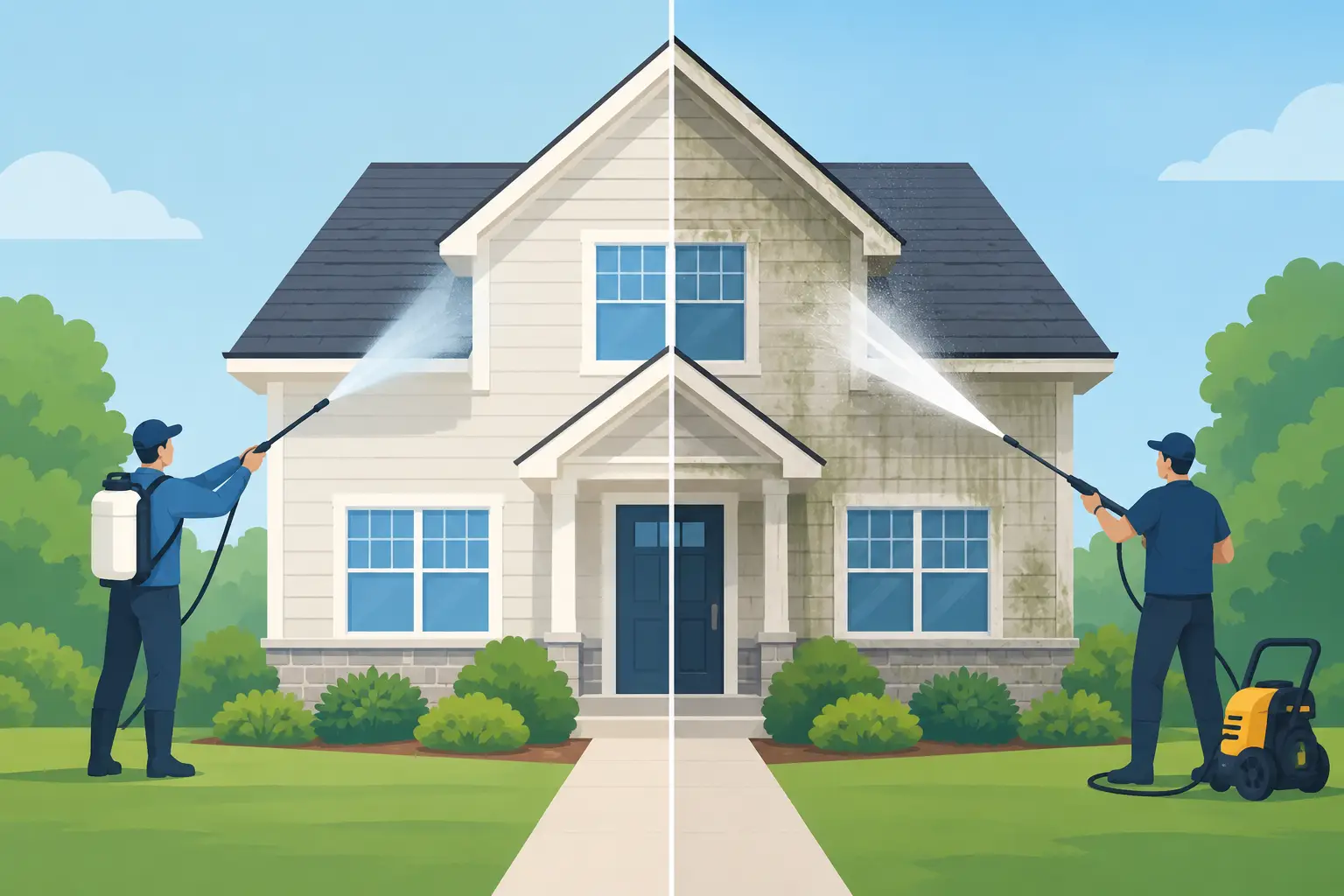
A blackened pool cage, green-streaked siding, or a driveway that has lost its original color can make one question feel urgent: soft wash versus power wash, which one will actually clean it without creating a new problem? The right answer depends less on what looks dirtiest and more on what the surface can safely handle.
For Orlando-area homes, humidity, shade, irrigation overspray, pollen, and regular rain create favorable conditions for algae, mildew, and grime. Those conditions affect painted exteriors, stucco, concrete, pavers, pool decks, and screen enclosures differently. A cleaning method that works well on a concrete driveway may be too aggressive for roofline trim, screens, or painted siding.
Soft Wash Versus Power Wash: The Practical Difference
Soft washing uses low-pressure application and rinsing, typically paired with a surface-appropriate cleaning solution. The solution does much of the work by treating organic growth and loosening surface contamination. Low pressure helps reduce the risk of forcing water behind siding, stripping paint, fraying screens, or etching a more delicate finish.
Power washing is commonly used to describe high-pressure cleaning. Technically, power washing can also involve heated water, while pressure washing refers to pressurized water without heat. In everyday residential service discussions, the terms are often used interchangeably. What matters to a homeowner is the actual pressure, cleaning products, nozzle selection, dwell time, and technician control being used on the surface.
Neither method is automatically better. Soft washing is generally the safer starting point for surfaces where organic growth is the primary issue and the material may be vulnerable to high pressure. Higher-pressure cleaning can be appropriate for durable hardscapes with embedded soil, tire marks, and ground-in grime. The method should follow the surface, not the other way around.
When Soft Washing Is Usually the Better Choice
Soft washing is commonly suited to house exteriors, painted soffits and fascia, stucco, vinyl, many pool cages, and screen enclosures. These areas often collect algae and mildew that need treatment, not force. Applying excessive pressure can leave visible lines, chip paint, stretch screens, disturb caulk, or push moisture into places where it should not go.
For a house wash, the goal is not to blast every mark from the wall. It is to remove the broad organic film that makes the exterior look dull or green while respecting paint condition, age, joints, and nearby landscaping. Older paint, hairline cracks, loose trim, or prior repairs should be treated as scope considerations. Cleaning can improve appearance, but it cannot correct failed paint, damaged stucco, or deteriorated sealant.
Pool cages deserve similar care. Florida screen enclosures trap moisture and pollen, which makes them especially prone to buildup. Yet screen mesh, frame finishes, door hardware, and nearby pool water all require controlled cleaning. A careful low-pressure approach is often more appropriate than a high-pressure pass that could damage screens or drive debris where it does not belong.
Soft washing also makes sense when the visible issue is mainly algae, mildew, or atmospheric dirt rather than deeply embedded staining. A technician may apply a cleaning mix, allow appropriate contact time, and rinse thoroughly at low pressure. Results depend on material condition, severity of buildup, drainage, shade, and whether staining has permanently altered the surface.
When Higher-Pressure Cleaning Makes Sense
Concrete driveways, walkways, curbs, and some patio surfaces can usually tolerate more pressure than painted siding or screens. These hard surfaces collect vehicle residue, compacted dirt, leaf tannins, irrigation marks, and black organic buildup in their pores. A controlled pressure-washing process can restore a noticeably cleaner appearance, particularly when paired with pre-treatment and even surface cleaning equipment.
The word controlled matters. More pressure is not always more effective. A poorly chosen tip, inconsistent distance, or rushed wand work can leave striping across concrete. On pavers, excessive pressure can dislodge joint sand, disturb fragile edges, or reveal uneven color that was already present beneath the surface grime.
Pool decks require a closer review. Many are concrete, but their coatings, texture, age, and slip-resistance can vary. A pressure level that is reasonable for one deck may be unsuitable for another. Pool equipment, furniture, drains, enclosed areas, and access routes also affect how the work should be planned.
For pavers, the appropriate approach depends on whether the concern is organic buildup, surface grime, efflorescence, oil staining, or old sealing material. Standard cleaning is not the same as stripping a failed sealer or correcting permanent discoloration. Those are separate conditions that should be identified before a price or outcome is assumed.
Choose by Surface Condition, Not by the Marketing Term
A useful way to make the soft wash versus power wash decision is to consider three things: the material, the type of buildup, and the condition of the surface.
A painted stucco wall with green algae calls for a different process than a concrete driveway with tire marks. A newer paver patio may need different handling than an older patio with loose joint sand. A screen enclosure with intact mesh is different from one with existing tears or brittle sections. These distinctions are why a single “whole property wash” description can create uncertainty.
The cleaning plan should also account for access and surrounding features. Landscaping may need pre-wetting and rinsing. Exterior outlets, open windows, fragile décor, vehicles, pets, and pool equipment need to be considered before work begins. If a technician cannot access a side yard, gated area, or rear patio safely, that may change the confirmed scope.
There is also a difference between cleaning and restoration. Organic growth can often be treated effectively. Rust, hard-water deposits, irrigation staining, paint oxidation, embedded oil, and permanent etching may require specialized products or may not fully respond to standard exterior cleaning. Clear expectations protect the homeowner from paying for a result that a routine wash cannot realistically deliver.
Questions to Ask Before Scheduling Exterior Cleaning
Start by asking what surfaces are included and what cleaning method is planned for each one. “Pressure washing” can mean very different things depending on whether the job includes a driveway, siding, pool deck, pavers, or enclosure screens.
Ask whether the price is tied to a defined scope. Square footage, number of stories, accessible areas, buildup level, gates, pool cages, and surface condition can all influence labor and process. A clear service tier is useful, but a final confirmation should still reflect the actual property rather than a generic online estimate.
It is reasonable to ask how landscaping and sensitive areas will be handled, whether pre-existing damage will be documented, and what conditions fall outside a standard cleaning service. These are not minor details. They determine whether the service is planned around the home or simply applied to it.
Payment timing matters as well. A homeowner should know the reservation terms, the remaining balance, and when payment is due. CurbLuma uses defined tiers and human scope confirmation so customers can understand what is being scheduled before work begins, with the remaining balance paid after completed service.
A Better Standard Than “Use the Strongest Machine”
Exterior cleaning should be judged by appropriate treatment, not by dramatic pressure. On a driveway, that may mean higher-pressure surface cleaning followed by detail work at edges. On siding or a pool cage, it may mean a carefully applied soft wash with a controlled rinse. On pavers or a coated deck, it may mean a property-specific review before selecting either approach.
If you are comparing quotes, look beyond the name of the method. Confirm the surfaces included, access assumptions, visible condition, exclusions, and payment terms. The most useful cleaning plan is the one that matches your property as it is - and gives you a clear understanding of the work before anyone begins.