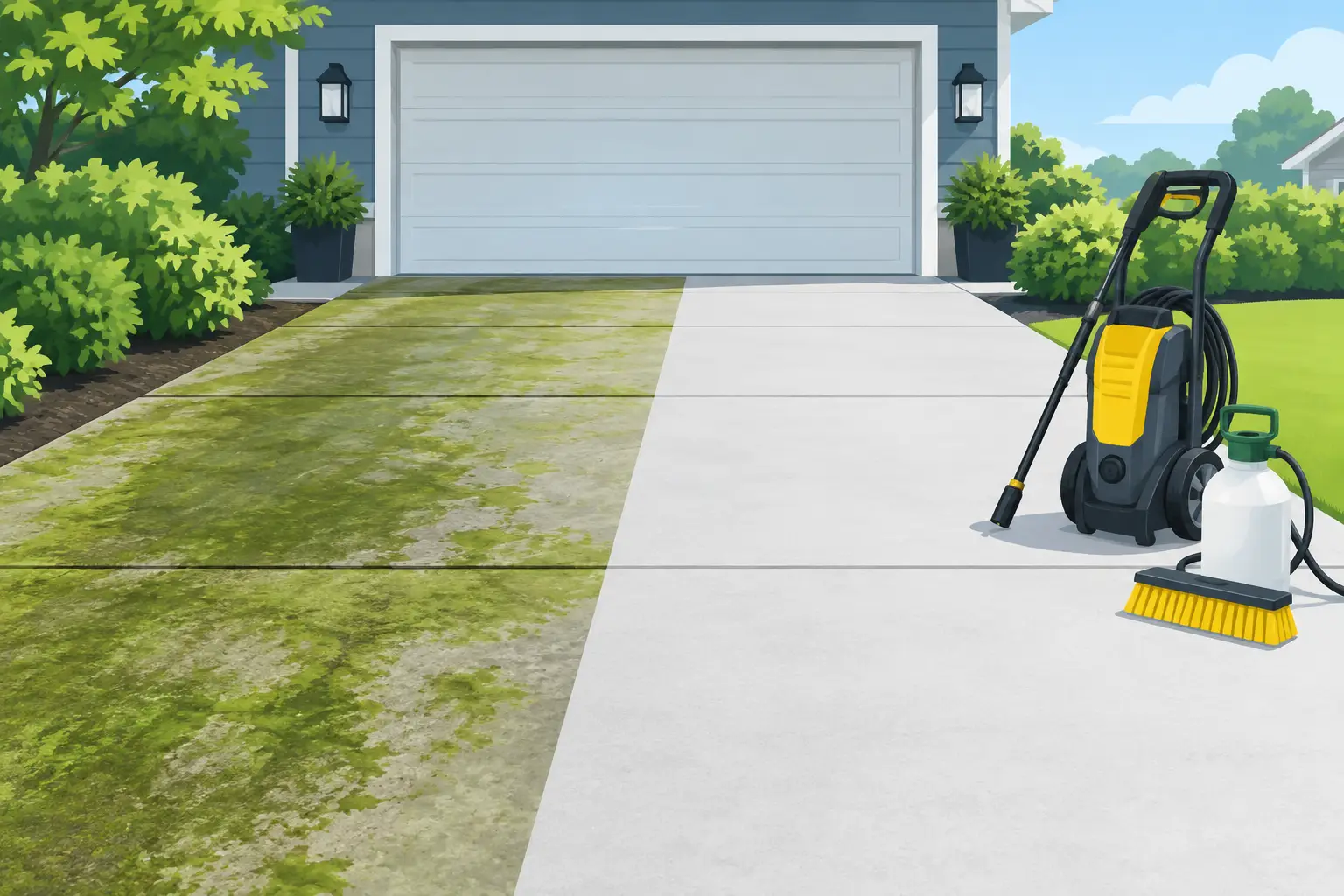
A driveway can look dirty long before it is covered in leaves or mud. In Central Florida, algae often begins as a faint green or dark film in shaded lanes, along expansion joints, and near irrigation overspray. Knowing how to remove algae from a concrete driveway means addressing the growth without damaging the concrete, flooding the garage, or sending cleaning runoff into your landscaping.
Algae is more than a curb-appeal issue. When wet, it can make smooth concrete slippery, particularly near walkways and the area where people step out of a vehicle. It also tends to return quickly if the moisture source is not considered. The right approach depends on how established the growth is, the condition of the concrete, nearby plants, and whether you have the equipment to clean evenly.
Why algae keeps growing on concrete
Concrete may look solid, but it is porous. It holds moisture and collects airborne organic material that algae can use as a food source. Florida heat, humidity, afternoon rain, tree cover, and sprinkler spray create the conditions algae prefers.
The most common problem areas are the portions of a driveway that receive less sun, sit beneath mature landscaping, or stay damp after irrigation. A north-facing section may remain green while the rest of the driveway appears relatively clean. Runoff from a roofline, blocked drainage, and soil washing onto the slab can make the issue worse.
Cleaning removes the visible growth, but it does not change those conditions. If sprinklers hit the driveway every morning or a dense hedge blocks airflow, expect maintenance cleaning to be needed more often. That is normal, not necessarily a sign that the first cleaning failed.
How to remove algae from a concrete driveway safely
Start by moving vehicles, planters, doormats, and loose items away from the work area. Sweep off leaves, sand, and debris first. Removing dry material gives the cleaning solution direct contact with the algae and reduces the chance of dragging grit across the surface.
Before using any solution, thoroughly wet nearby grass, shrubs, and flower beds. Continue to rinse them during and after cleaning. This step matters, especially where a driveway is bordered by tight landscaping or drains toward a planted area.
For light to moderate algae, a concrete-safe exterior cleaner with an algae-killing ingredient can be effective when used according to its label directions. Apply it evenly, allow the stated dwell time, then rinse thoroughly. Do not let chemicals dry on the concrete, garage door, painted trim, or plants. More dwell time is not always better.
A diluted household bleach solution is sometimes used on bare concrete, but it requires care. Bleach can harm turf and ornamentals, discolor fabrics, affect nearby metal, and create runoff concerns. Never mix bleach with acids, ammonia, or other cleaners. If the driveway has decorative finishes, colored concrete, a coating, or questionable prior repairs, do not assume bleach is appropriate without confirming the surface requirements.
After treatment, rinse the driveway from the high point toward a suitable drainage area. Work methodically so residue is not left in low spots or at the garage threshold. If algae remains after a proper treatment and rinse, it may be embedded in the concrete pores or mixed with years of dark organic staining. That is when mechanical cleaning may be needed.
Use a pressure washer with restraint
Pressure washing can improve the result, but a pressure washer is not automatically the safest answer. A narrow tip held too close can leave visible wand marks, etch older concrete, expose aggregate, or create uneven clean patches that stand out once the slab dries.
For a homeowner using a pressure washer, choose a wider fan pattern, keep the nozzle moving, and maintain a consistent distance from the surface. Test an inconspicuous area first. Avoid aiming directly into expansion joints, cracks, the garage door seal, or loose edges of deteriorating concrete.
A surface cleaner attachment generally produces a more even finish across a large driveway than a wand alone. Even then, water pressure should be matched to the condition of the concrete. Newer sound concrete can tolerate a different approach than an older slab with spalling, cracking, exposed aggregate, or patched areas.
Pressure alone may remove the green color temporarily without fully treating the organic growth. Combining an appropriate cleaning treatment with controlled rinsing is often more effective than relying on high pressure to force a result.
Methods to avoid on a residential driveway
Aggressive cleaning can create a bigger visual problem than algae. Avoid using a zero-degree pressure tip on concrete, especially in a fixed spot. It can cut lines into the surface that cannot be blended out with routine cleaning.
Do not use acidic masonry products simply because the driveway looks dark. Acid can alter the concrete surface, create uneven color, and react unpredictably with prior coatings, repair materials, or decorative finishes. It is not a general-purpose algae cleaner.
Wire brushes and abrasive grinding tools are also poor choices for ordinary organic buildup. They can scratch the surface and leave a noticeably different texture. For the same reason, avoid repeatedly scrubbing one small area while leaving the surrounding concrete untouched. A clean spot in the middle of a stained driveway can look worse than a uniformly weathered slab.
Finally, do not let runoff become an afterthought. Redirecting concentrated cleaner into a storm drain, pool deck, or planting bed can create avoidable problems. Use only the amount of product needed and rinse with the property layout in mind.
When professional driveway cleaning is the better option
A homeowner can handle a small, lightly affected area with the right preparation. Professional cleaning becomes more practical when algae covers most of the driveway, the slab has stubborn black staining, or the property has close landscaping, drainage concerns, and adjacent surfaces that need protection.
It is also worth getting a property-specific review when the driveway includes pavers at the edges, a coated finish, substantial cracking, rust stains, paint marks, oil spots, or a steep slope toward the street or garage. These conditions can require separate treatment methods. A single “driveway cleaning” label does not tell you whether all stains will respond the same way.
For Orlando-area homes, the best service experience starts with a confirmed scope. The provider should understand the driveway size, visible condition, access, water availability, surrounding plants, and whether cleaning is limited to concrete or includes sidewalks and entry areas. Clear details reduce the chance of a vague quote becoming a different price on service day.
CurbLuma coordinates exterior cleaning through defined service tiers and human scope confirmation, so homeowners can clarify the requested surface and property conditions before scheduling. That approach is especially useful when algae is only one part of the visible buildup and the driveway may need a broader, surface-appropriate cleaning plan. Payment timing and any reservation terms should also be clear before work begins, not introduced after the service is completed.
Keep algae from returning as quickly
You cannot remove Florida humidity, but a few property adjustments can slow regrowth. Trim back vegetation that holds shade over the slab, and clear leaves before they break down into organic residue. Check sprinkler heads periodically to make sure they are watering landscaping rather than the driveway.
Watch how water leaves the area after rain. If one section stays wet much longer than the rest, clean gutters, review downspout discharge, and address minor drainage issues where feasible. Keep in mind that some shade is desirable around a home, so this is not a reason to remove healthy trees solely for driveway cleaning. The goal is better airflow and less constant moisture, not a bare yard.
A periodic light cleaning is usually easier on the surface than waiting until the driveway becomes dark, slick, and heavily colonized. Take a quick look after the rainy season or whenever you notice green growth returning near the edges. Addressing it early helps preserve a cleaner, more even-looking driveway without resorting to unnecessary pressure or harsher chemicals.