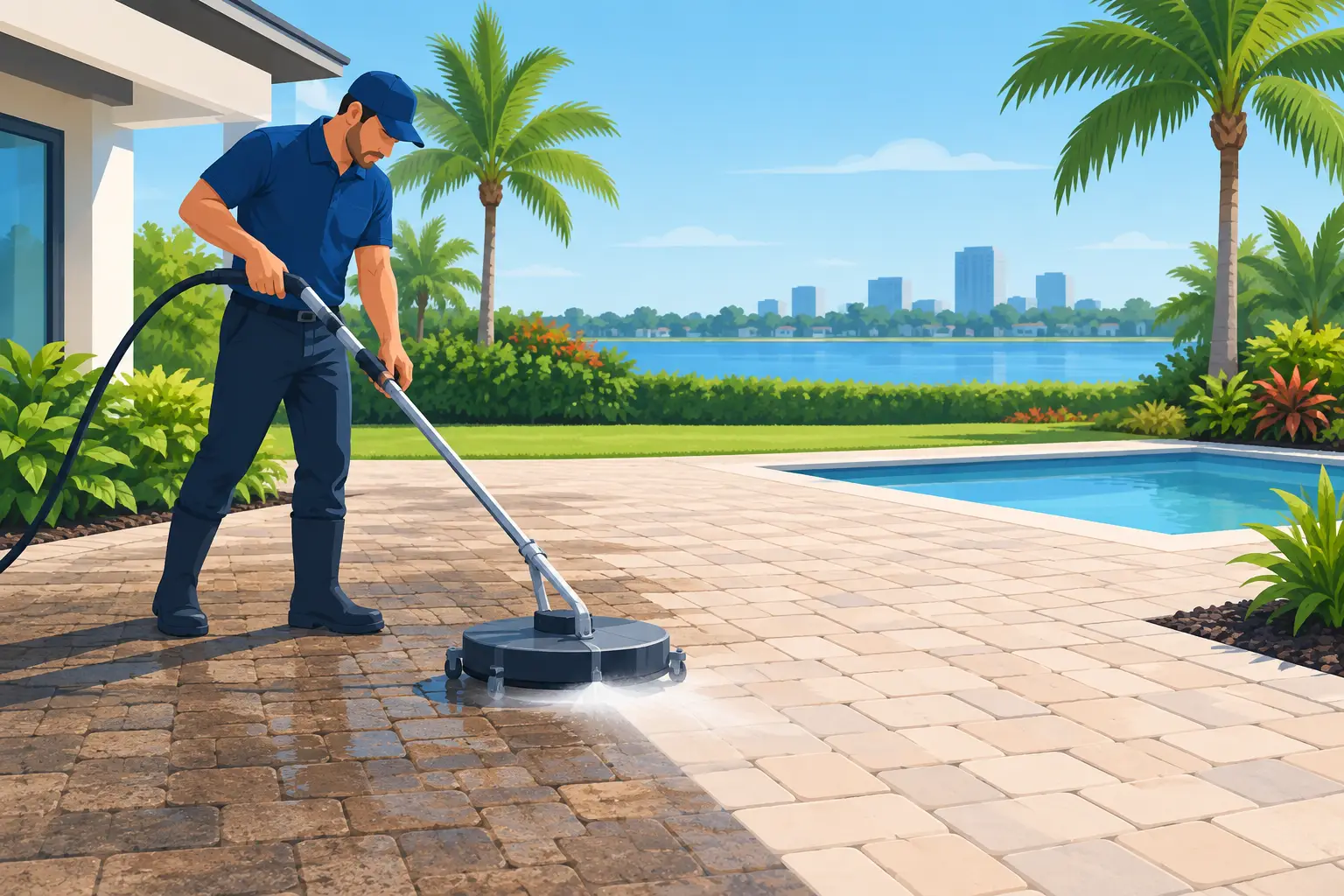
A paver driveway can look older than the home around it after one Florida summer. Dark organic growth, leaf stains, irrigation marks, and tracked-in grime settle into the textured surface and joints, changing the appearance of an otherwise well-kept entry, patio, or pool area. Professional paver cleaning Orlando homeowners can rely on is not simply about applying more pressure. It is about matching the method to the surface, the buildup, and the condition of the paver system.
For properties with driveways, walkways, patios, and pool decks, the goal is usually straightforward: improve the appearance of the hardscape without creating avoidable issues with joint sand, adjacent landscaping, screens, or nearby exterior finishes. That requires a defined scope before the work begins.
Why Orlando Pavers Get Dirty So Quickly
Central Florida's humidity creates favorable conditions for algae, mildew, and other organic buildup. Shade from trees, rooflines, pool cages, and neighboring homes can keep pavers damp long after rain has stopped. In sunny areas, irrigation overspray and soil residue may leave a different pattern of discoloration.
Pavers also have more texture and more seams than a poured concrete slab. Those joints collect sand, organic material, and moisture. Over time, the surface can develop a patchy appearance even when the pavers themselves remain structurally sound.
Not every dark area has the same cause. A blackened strip near a shaded wall may be organic growth, while rust-colored marks near irrigation heads may need separate evaluation. Oil spots on a driveway, paint residue, efflorescence, and deep-set stains can also require a different approach than routine surface cleaning. A responsible service provider should distinguish between general cleaning and stain-removal work that may not be included in a standard visit.
What Professional Paver Cleaning Should Address
The appropriate cleaning method depends on the paver type, age, installation condition, and the surrounding property. Concrete pavers, natural stone, brick, and travertine do not all respond the same way. The condition of the joints matters as much as the visible surface.
For many residential paver areas, controlled pressure washing is used to lift surface grime and organic buildup. The work should be adjusted for the area being cleaned rather than treated as a one-setting process. A driveway may tolerate a different cleaning approach than a delicate pool deck or a paver patio beside a screened enclosure.
The objective is not to make broad promises that every stain will disappear. Some discoloration is permanent or has penetrated the material. Some areas may show color variation after cleaning because dirt had been masking the paver's existing wear. Clear expectations protect the homeowner from being surprised by results that are limited by the surface itself.
A well-defined service scope should also account for runoff, drainage patterns, nearby plants, furniture, and access points. If a pool deck is included, the scope should clarify whether the surrounding screen enclosure, cage framing, or patio furniture are part of the requested work. These details affect both pricing and the time required on site.
Joint Sand Is Part of the Conversation
One of the most common concerns with paver cleaning is joint sand. Cleaning can dislodge loose, deteriorated, or poorly compacted sand between pavers. That does not always mean the cleaning was performed incorrectly. In some cases, it reveals a maintenance need that was already present.
Homeowners should not assume that every paver cleaning service automatically includes sanding or sealing. Those are separate services with different materials, preparation requirements, weather considerations, and costs. Treating them as automatic add-ons can create confusion and unnecessary pressure during booking.
At CurbLuma, paver sealing is not built into the published cleaning price. That separation helps keep the cleaning scope clear. If joint sand appears low or a homeowner is considering sealing after cleaning, that can be discussed based on the actual condition of the area rather than folded into a generic package.
There is also a timing consideration. If resealing is planned, the pavers need adequate time to dry and any repairs or sanding should be handled in the proper order. A clean surface is useful preparation, but it is not the same as a completed restoration project.
When Paver Cleaning Makes Sense
There is no single schedule that fits every Orlando property. A heavily shaded walkway near mature landscaping may need attention sooner than a sun-exposed driveway with limited tree cover. Pool homes can also see faster buildup around damp, enclosed outdoor areas.
Many homeowners schedule cleaning when the surface starts to look noticeably dark, slick, or uneven in color. Others plan it before hosting guests, listing a home, completing landscaping work, or preparing for a seasonal gathering. Waiting until buildup is very heavy can make the visual change more dramatic, but it may also mean the work needs more time and careful evaluation.
If pavers feel slippery when wet, the issue deserves prompt attention. Cleaning may improve traction by removing organic growth, but surface texture, drainage, and the underlying material still influence safety. No cleaning service should guarantee that a surface will become slip-proof.
Questions to Settle Before Booking Paver Cleaning in Orlando
The fastest way to receive an accurate service plan is to provide the property address and a clear description of the areas you want cleaned. Photos can help identify the approximate size, layout, visible buildup, and access conditions, though they do not replace confirmation of the scope.
Before scheduling, it helps to clarify whether the request covers only a driveway or also includes walkways, a front entry, a patio, a pool deck, or other paver sections. It is also useful to mention gates, narrow side yards, loose pavers, cracked areas, drainage concerns, and any stains that appear different from ordinary grime.
For a smooth appointment, move portable furniture, planters, toys, and vehicles out of the work area when possible. Secure pets indoors, and let the service team know about access instructions or areas that should not be entered. These are practical details, not formalities. They help the assigned field professional work safely and reduce the chance that parts of the property are missed or excluded because they were inaccessible.
A Clearer Way to Arrange the Service
Exterior cleaning should not begin with vague language such as “the whole patio” when the condition, square footage, and boundaries are not confirmed. Defined tiers can be useful for common residential needs, but the final service should still match the actual property.
A practical booking process has three parts. First, the homeowner shares the address, requested areas, and any relevant photos or concerns. Next, a real person confirms coverage, service scope, access, and pricing before the appointment is finalized. Finally, the remaining balance is paid after completed service rather than requiring full payment upfront.
That structure reduces uncertainty on both sides. It gives the homeowner a clear view of what is included and gives the cleaning team the information needed to prepare for the property. For commercial locations, scope confirmation is even more important because access, operating hours, traffic flow, and site-specific requirements can vary significantly.
Avoid the Lowest-Price Assumption
A low initial quote can be appealing, especially when a paver area looks simple from the street. But the useful comparison is not price alone. Ask what areas are included, whether the provider has reviewed the property conditions, how joint-sand concerns are handled, and when payment is due.
The best service is not necessarily the one that promises the most dramatic result or bundles every possible add-on. It is the one that explains the work honestly, confirms the boundaries before arrival, and uses an appropriate method for the surface in front of them.
Clean pavers can make a driveway, patio, or pool area feel cared for again. Start with the areas that affect daily use most, confirm the scope before scheduling, and let the actual condition of the surface guide any next steps.