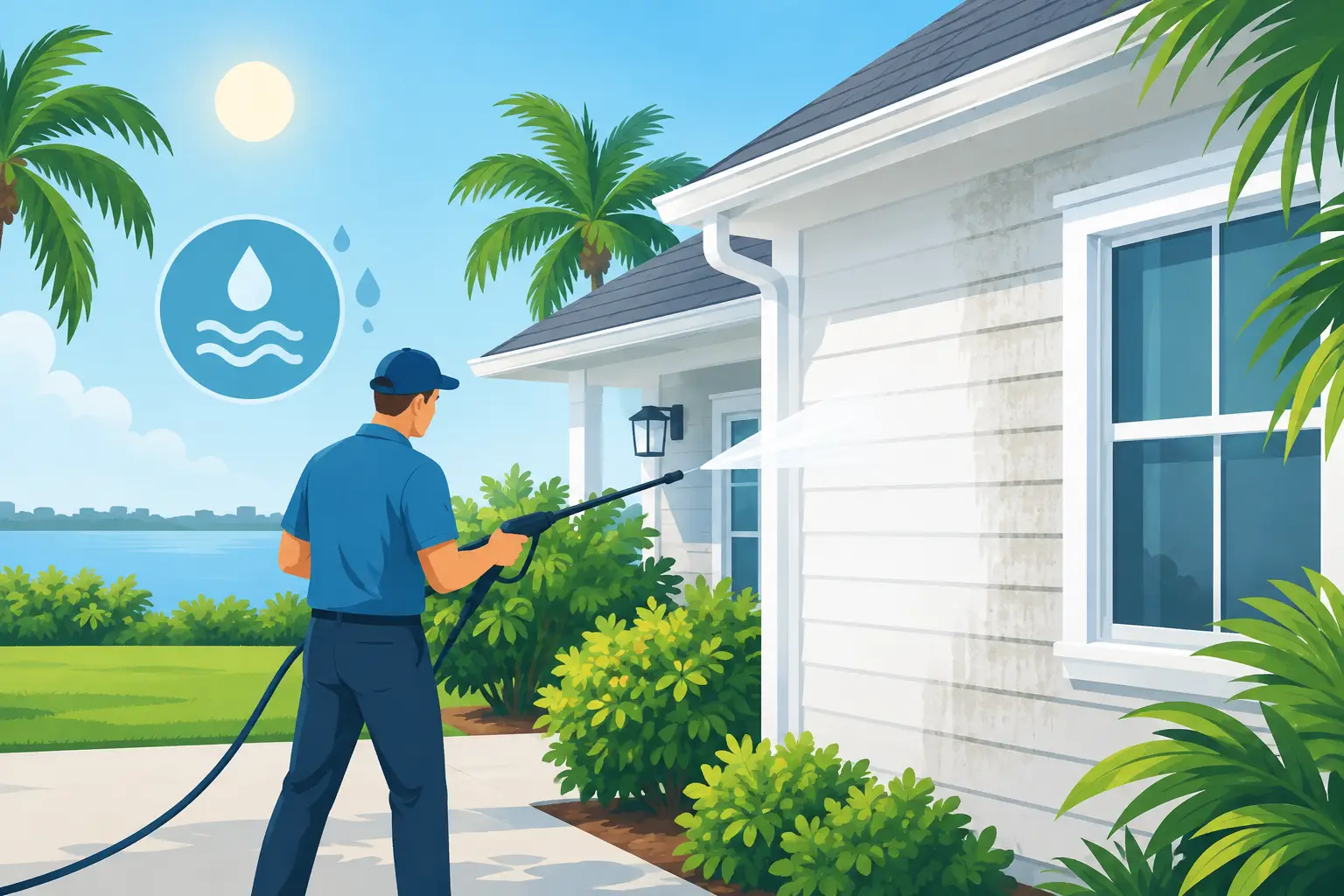
By late summer, a clean-looking Central Florida home can develop a green cast along soffits, dark spots on a pool cage, and a driveway that looks several years older than it is. That is not always a sign of neglect. Heat, frequent rain, shade, and persistent moisture create ideal conditions for organic buildup on exterior surfaces. This Florida humidity cleaning guide explains what homeowners are seeing, what can reasonably be cleaned, and why the method matters as much as the result.
Humidity does not affect every surface in the same way. Concrete holds moisture and collects runoff. Vinyl, painted siding, stucco, and trim can develop mildew and algae in sheltered areas. Pavers gather organic matter in joints and low spots. Screen enclosures collect pollen, webs, and buildup that can reduce light and make the pool area feel less usable. A sound cleaning plan starts by separating these conditions rather than treating the entire property with one setting, one chemical mix, or one promise.
Why Florida Humidity Leaves Exterior Buildup Behind
Florida's humid climate allows algae, mildew, mold-like staining, pollen residue, and surface grime to remain damp longer after rain or irrigation. North-facing walls, areas under trees, covered entryways, and surfaces near gutters often show it first. Pool decks and driveways can also develop darkened areas where water drains slowly or where vehicles track in soil and residue.
People often use the word mold for nearly every dark or green exterior mark. On outdoor surfaces, the visible condition may be algae, mildew, accumulated dirt, leaf tannins, or a combination of several issues. A site review should focus on the surface, the location of the buildup, and whether staining has had time to set. That approach avoids overstating what is present and helps determine whether cleaning is likely to improve the appearance without creating unnecessary risk.
Humidity also changes the maintenance timeline. A driveway that stays bright for a long period in a drier climate may need attention more frequently in Orlando. There is no universal schedule because shade, irrigation patterns, tree cover, pool use, and drainage vary from one property to the next. Most homeowners get better results by responding to early visible buildup than waiting until surfaces become uniformly dark or slippery.
Match the Cleaning Method to the Surface
The central rule in any Florida humidity cleaning guide is simple: pressure is a tool, not a default. Higher pressure can be appropriate for durable concrete when the condition and access support it. It is not automatically appropriate for painted surfaces, roof-adjacent areas, fragile screens, older pavers, or delicate trim.
House Washing and Exterior Walls
House washing usually calls for a lower-pressure approach with surface-appropriate cleaning solutions and controlled rinsing. The purpose is to remove organic buildup and surface grime without forcing water behind siding, disturbing paint, or damaging finishes. Stucco deserves particular care because its texture can hold residue while its condition may vary by age and previous repairs.
Homeowners should point out oxidized siding, peeling paint, loose fixtures, open gaps, and areas that have been recently repaired or painted. Cleaning may improve the surrounding surface, but it will not correct paint failure, cracks, failed caulking, or preexisting water intrusion. Clear condition notes protect both the homeowner and the service team from confusing a maintenance issue with a cleaning result.
Driveways, Walkways, and Concrete
Concrete can collect tire marks, irrigation staining, algae, and embedded grime. Professional surface cleaning can provide a more even result than using a narrow wand pattern, which may leave visible stripes when used inconsistently. Pretreatment and post-treatment may also be considered based on the condition, though results depend on the age and type of stain.
Rust, paint, oil, fertilizer marks, and deeply set discoloration are not all standard cleaning issues. They may require specialized treatment, separate approval, or a different expectation. Asking for a defined scope before scheduling helps clarify whether the requested service covers general cleaning or a specific stain concern.
Pavers and Pool Decks
Pavers need a measured approach. Cleaning can remove surface grime and organic growth, but older pavers may have fading, uneven color, loose joint sand, prior sealing products, or stains that do not lift evenly. A cleaning service should not imply that every paver will return to a uniform, newly installed appearance.
Pool decks add another consideration: usability. Algae buildup can make walking areas less inviting and, in some cases, slick when wet. The right method depends on whether the deck is concrete, paver, coated, travertine, or another material. Surface-specific review matters here, especially around pools, drains, furniture, and landscaping.
Pool Cages and Screen Enclosures
Screens, aluminum framing, and enclosure roofs are exposed to airborne debris and moisture from several directions. They often benefit from a controlled wash rather than aggressive pressure. Screens can be fragile, particularly if they are older, torn, loose, or already weakened by sun exposure.
Before cleaning, move or identify furniture, plants, electronics, and personal items within the enclosure. If there are damaged panels or loose hardware, share that information during scope confirmation. Cleaning can improve the enclosure's appearance, but it is not a screen repair service unless that work is specifically arranged.
A Practical Florida Humidity Cleaning Guide for Homeowners
Exterior cleaning is more predictable when the homeowner and service provider agree on what is included before work begins. Photos help, but an address review, access details, and notes about the surfaces are also useful. A driveway that looks straightforward from the street may include a long side path, rear patio, detached structure, or heavily shaded section that changes the actual scope.
Use this three-step process when planning service:
- Identify the surfaces and the concern. Note whether the request involves siding, concrete, pavers, a pool deck, screens, or a combination. Mention specific areas such as black streaks below gutters, green buildup on the north wall, oil spots, irrigation marks, or a slippery pool path.
- Confirm access and condition. Provide the property address, gate information, water access if requested, and any practical limitations such as pets, parked vehicles, pool equipment, delicate landscaping, or restricted areas. Share known surface issues, including loose pavers, peeling paint, damaged screens, and active leaks.
- Approve a defined scope before scheduling. The service description should state what areas are included, any exclusions, the price or applicable tier, and any property-specific adjustments. For unusual layouts or commercial sites, custom review is often more accurate than a broad estimate.
This process may feel more deliberate than booking a generic wash, but it reduces avoidable surprises. It also makes it easier to compare services fairly. A low initial number is not necessarily the lower final price if it does not include the surfaces you expected to be cleaned.
When Cleaning Should Wait or Be Reconsidered
Not every exterior condition should be cleaned immediately. Active paint failure, crumbling concrete, loose masonry, damaged screens, unsealed electrical components, and drainage problems may need attention first. A reputable provider should be willing to identify limits rather than proceed with a method that could worsen a known issue.
Weather also matters. Light rain does not always prevent exterior work, but thunderstorms, high winds, or conditions that affect safety and rinsing can require rescheduling. For homeowners, that is not a service failure. It is part of performing the work with appropriate control.
The same applies to stain expectations. Organic buildup often responds well to the correct cleaning method. Permanent discoloration, etching, oxidation, rust, and prior coating failures may remain partly visible. A clear conversation before work begins is more useful than an unrealistic claim afterward.
Choosing Service Without the Sales Pressure
For many homeowners, the concern is not whether their exterior needs cleaning. It is whether the quoted service actually matches the property. Look for published or clearly explained service tiers, human confirmation of the requested scope, and a payment process that does not require carrying all the risk upfront.
CurbLuma coordinates exterior cleaning with defined tiers and property-specific confirmation, so homeowners can understand what is being scheduled before a field professional arrives. The remaining balance is paid after completed service, rather than requiring full prepayment for work that has not yet been performed. That structure is especially useful when a home has a pool cage, varied paving, access limitations, or other details that should be confirmed rather than assumed.
A humid climate will keep giving exterior surfaces something to collect. The practical goal is not to promise a permanently maintenance-free property. It is to address buildup early, use a method suited to each surface, and schedule service with a scope that is clear before anyone starts cleaning.