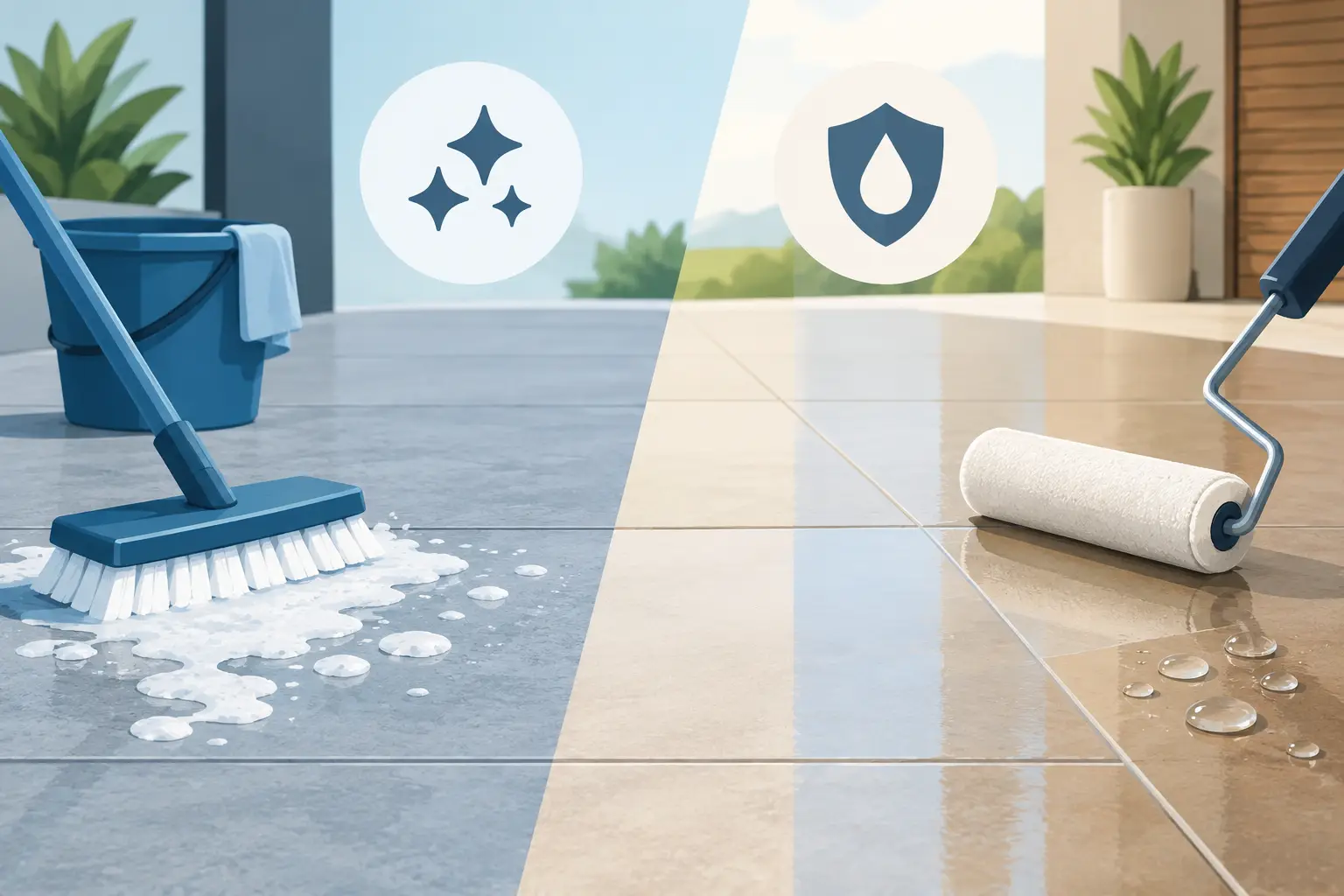
A driveway can look faded, stained, and overdue for attention without necessarily needing a coating. That distinction matters when comparing surface cleaning versus sealing. One service removes what has collected on the surface. The other is a separate preservation step that may change how a material looks, sheds water, and responds to future staining.
For Orlando homeowners, the difference is especially relevant. Humidity, shade, irrigation overspray, leaf tannins, pool-area moisture, and everyday vehicle traffic can make concrete and pavers look older than they are. Cleaning may be all that is needed. Sealing may make sense in other cases, but it should not be treated as an automatic add-on or a substitute for proper cleaning.
Surface Cleaning Versus Sealing: The Core Difference
Surface cleaning is intended to remove visible buildup and contaminants. Depending on the surface and its condition, that can include algae, mildew, grime, dirt, tire marks, pollen, and some organic staining. The appropriate method varies. Concrete driveways may need controlled pressure washing, while pool decks, painted surfaces, screen enclosures, and certain pavers may require lower-pressure methods and surface-specific treatment.
Sealing applies a protective product after a surface is clean and adequately dry. The product and results depend on the material. On pavers, for example, some sealers are intended to reduce absorption, help stabilize joint sand, deepen color, or make routine cleaning easier. On concrete, a sealer may offer water repellency or limited stain resistance. It does not remove embedded stains, repair damaged pavers, fix settling, or reverse surface wear.
The practical difference is simple: cleaning addresses present conditions; sealing is a possible next step for ongoing protection or a preferred finished appearance. Neither service should be sold as though it automatically solves every exterior maintenance concern.
When Cleaning Is Usually the Right First Step
Cleaning is the logical starting point when the main issue is visible buildup. A driveway with dark organic growth, a pool deck that feels grimy underfoot, or pavers dulled by dirt and landscape debris need a proper assessment and cleaning before anyone can judge their true condition.
A clean surface also gives homeowners a more accurate view of what remains. What appeared to be a permanent discoloration may lift substantially with the correct method. Conversely, cleaning can reveal older rust marks, oil penetration, fading, etching, chipped coatings, or paver damage that buildup had concealed. That is useful information before committing to another service.
For many properties, a recurring cleaning schedule is the more practical investment. Florida exterior surfaces continually collect moisture-driven growth and airborne debris. Even a sealed surface will eventually need cleaning. Sealer can reduce some absorption, but it does not stop pollen from settling, algae from forming in consistently shaded areas, or irrigation water from leaving mineral deposits.
Cleaning is also generally the better choice when a homeowner wants a straightforward refresh before guests arrive, before listing a home, after landscaping work, or as part of regular curb-appeal maintenance. In these situations, the objective is clear: restore a cleaner appearance without adding an unnecessary treatment.
When Sealing May Be Worth Considering
Sealing deserves consideration after cleaning when the material is in good enough condition, the surface has been given time to dry, and the homeowner has a specific reason for wanting it. That reason might be preserving the look of decorative pavers, reducing how readily an uncoated surface absorbs spills, or supporting a more consistent finished appearance in a highly visible outdoor area.
Paver patios, walkways, and driveways are common candidates because the joints and textured faces can retain dirt and moisture. Some homeowners also prefer the richer color that certain products create. That preference is personal, not a maintenance requirement. A color-enhancing sealer can look attractive, but it changes the surface's appearance and may require future maintenance to keep the finish consistent.
Sealing is not always the right choice for slippery-prone areas. Pool decks, entry paths, and shaded walkways need careful product selection and a realistic discussion of traction. A glossy or heavily enhanced appearance may not fit the way a surface is used. The same caution applies when pavers have active settling, deteriorating joints, persistent efflorescence, or prior coating failures. Those conditions may need repair, stripping, or specialist review before a new sealer is applied.
Timing matters as well. A sealer applied to a surface that is not sufficiently clean or dry can trap contaminants, create uneven appearance, or perform poorly. A quick visual inspection is not always enough. Material type, weather, drainage, prior treatments, and the surface's moisture condition all affect the decision.
Why Cleaning and Sealing Should Be Priced Separately
Cleaning and sealing require different labor, materials, timing, and risk management. Treating them as one vague package can make it harder to understand what is included, what condition the surface must be in, and what result is realistic.
A cleaning scope should identify the surface to be cleaned, the access available, and whether the issue is ordinary buildup or a more specific stain concern. Sealing should have its own scope that addresses the material, product type, preparation requirements, cure time, exclusions, and expected appearance. If a property has multiple surface types - such as concrete driveway, travertine pool deck, and paver patio - they should not be assumed to need the same approach.
This separation also protects homeowners from paying for a coating before they know whether it is needed. At CurbLuma, published cleaning tiers do not bundle paver sealing into the cleaning price. That keeps the cleaning decision clear and avoids presenting an optional preservation service as a required part of getting exterior surfaces clean.
Questions to Ask Before Approving Sealing
Before moving ahead with sealing, ask what problem it is intended to solve. If the answer is only that the surface looks dirty, cleaning first is usually the appropriate next step. If the answer involves absorption, appearance preference, joint-sand performance, or anticipated use, then a separate sealing review may be reasonable.
Ask whether the surface has been sealed before and, if so, what type of product was used. Compatibility matters. Applying a new product over an unknown or failing prior coating can lead to blotchiness, hazing, peeling, or inconsistent absorption. Also ask whether staining is topical or embedded. A sealer is not a stain remover, and it may make unresolved discoloration more noticeable.
For pavers, look beyond color alone. Check for loose or missing joint sand, shifting edges, drainage patterns, weed growth, and white mineral deposits. For concrete, consider cracks, spalling, old paint, and oil spots. These conditions do not always prevent cleaning, but they can change what should be promised and whether sealing is sensible.
A Practical Decision Process for Your Property
Start with the result you want from the area. If you want a cleaner driveway, a more usable pool deck, or pavers that no longer look dark with organic buildup, request cleaning based on the actual surfaces involved. Provide the address, photos when requested, and any details about stains, gates, pool equipment, fragile landscaping, or access restrictions.
Next, confirm the scope with a real person before scheduling. A defined scope reduces uncertainty about which areas are included and which conditions may need additional review. It is especially helpful for larger corner lots, properties with separate patios and walkways, or commercial sites where access and requested work vary significantly.
After cleaning, reassess the surface in daylight. If it now looks good and the concern was primarily buildup, routine cleaning may be the right long-term plan. If you still want added protection or a particular paver finish, seek a separate sealing quote with the material, preparation, and maintenance expectations clearly stated. Do not feel pressured to decide before you can see the cleaned surface.
A well-maintained exterior does not require every available service. It requires the right service for the surface, the condition, and the result you actually want. Clean first when cleaning is the need, and consider sealing only when its benefits are clear, its limitations are understood, and the scope is confirmed before work begins.