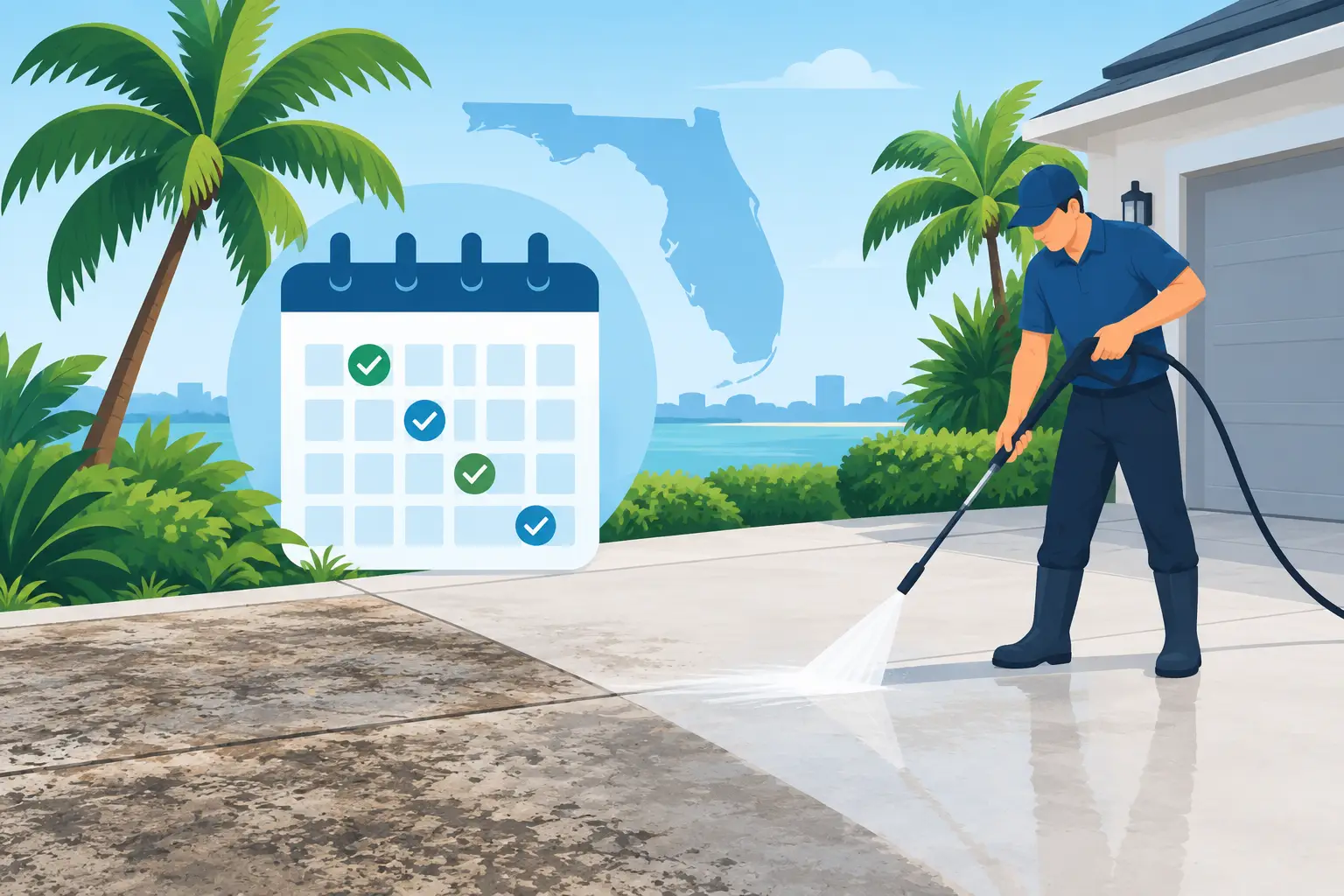
A driveway can look noticeably darker in a single rainy season, especially where a car drips, sprinklers overspray, or tree cover holds moisture on the slab. Concrete cleaning frequency is not just a calendar question. For Orlando-area properties, the right interval depends on how quickly organic growth, tire marks, rust, and everyday grime return - and on whether the surface can still be cleaned effectively without more involved stain treatment.
How Often Should Concrete Be Cleaned?
For most residential concrete in Central Florida, a professional cleaning every 12 months is a reasonable baseline. That schedule works well for open driveways and walkways with average vehicle traffic, decent drainage, and no persistent shade.
Some properties need cleaning every 6 to 9 months. This is common for north-facing areas, heavily shaded driveways, pool decks near landscaping, and concrete that stays damp after rain or irrigation. Green or black organic buildup does not need to cover the entire surface before it becomes worth addressing. Once it is visible in traffic paths, along edges, or in expansion joints, it can make an otherwise maintained property look neglected.
At the other end, low-traffic concrete with full sun and effective drainage may stay presentable for 12 to 18 months. Waiting longer can be reasonable when the surface remains clean and safe underfoot. The goal is not to sell an unnecessary recurring service. It is to avoid allowing buildup and stains to become the new normal for the property.
What Changes Concrete Cleaning Frequency?
The same cleaning schedule does not fit every driveway, sidewalk, patio, or pool deck. Concrete is durable, but its appearance is affected by the conditions around it.
Shade and Florida humidity
Shade is one of the strongest predictors of organic growth. A driveway beneath mature trees or a walkway along the shaded side of a home may dry slowly after storms. In Orlando's humidity, that retained moisture gives algae, mildew, and surface biofilm time to develop.
A sunny driveway may show dust, tire marks, and leaf staining, while a shaded driveway often develops a darker film that makes the concrete look older than it is. If one side of the property consistently looks different from the other, it may need a separate cleaning interval rather than a full-property schedule based on the cleanest area.
Drainage, irrigation, and runoff
Standing water and repeated overspray accelerate discoloration. Look for recurring dark patches near downspouts, sprinkler heads, landscape beds, and low spots in the slab. These areas may need attention before the rest of the driveway does.
Drainage problems should also be separated from cleaning problems. Cleaning removes existing buildup, but it will not correct a downspout that discharges across the concrete or a sprinkler that hits the same section every morning. Adjusting those conditions can extend the time between cleanings and improve the result after service.
Vehicle use and household activity
Concrete at the garage entrance receives more than rain and foot traffic. Tires carry road film onto the driveway, vehicles may leave oil residue, and trash bins or outdoor equipment can create concentrated marks. A household with several daily drivers may benefit from annual driveway cleaning even when the rest of the exterior concrete can wait longer.
Fresh oil spots deserve prompt attention. Professional surface cleaning can improve general discoloration, but old petroleum stains can penetrate porous concrete and may not disappear completely. Asking for the stain location during scope confirmation sets more realistic expectations than assuming every mark will clean evenly.
Leaves, mulch, and metal stains
Leaves, berries, fertilizer, mulch, and rusting patio furniture can all leave distinct stains. These are not always solved by increasing pressure. Some need surface-specific treatment, and some may remain partially visible depending on how long they have been present and how deeply they have set.
That distinction matters when comparing service options. A standard concrete cleaning scope should be clear about what areas are included and whether visible specialty stains require review. A defined tier is more useful than a broad promise that every stain will vanish.
A Practical Schedule by Concrete Area
Driveways usually need the most regular attention because they combine vehicle traffic, weather exposure, and curb-facing visibility. Plan on annual cleaning for a typical driveway, or every 6 to 9 months when shade, irrigation, or frequent traffic causes visible buildup.
Front walkways and entry paths often benefit from being cleaned with the driveway, even if they are not as dirty. They frame the approach to the home and can become slippery where moisture collects. If the walkway remains clean between driveway services, there is no need to force it into a shorter interval.
Pool decks require a more careful approach. They are used barefoot, exposed to splash-out, and often partially covered by a screen enclosure. Cleaning may be needed every 6 to 12 months based on shade, vegetation, and how the deck is used. The right method should account for the deck material and surrounding pool environment, not simply treat it like a driveway.
Patios, side yards, and backyard slabs can often follow a 12- to 18-month schedule. Their timing is usually driven by how visible they are, whether outdoor entertaining is planned, and whether the surface develops slippery organic growth. A patio that is clean but lightly weathered may not need immediate service. A patio with dark buildup near doors or seating areas likely does.
Signs It Is Time to Schedule Cleaning
Calendar-based planning is helpful, but surface condition should have the final say. Consider scheduling a review when concrete looks unevenly dark, feels slick after rain, develops green or black growth, or shows tire tracks and runoff patterns that no longer rinse away.
It also makes sense to plan ahead of a gathering, listing photos, or a broader exterior cleanup. The practical benefit is not only appearance. Cleaning walkways, driveways, and pool-adjacent surfaces before buildup becomes heavy can make maintenance more predictable and reduce the chance of surprise scope changes close to an event.
Avoid treating a single dirty corner as proof that every exterior surface needs the same work. A clear request might identify the driveway, front walk, and pool deck separately, then note any stained areas, restricted access, gates, pets, or parked vehicles. That gives the service coordinator enough information to confirm what is included before scheduling.
Why Method Matters as Much as Timing
Concrete cleaning is often described as pressure washing, but the appropriate method depends on the surface condition, surrounding materials, and the type of buildup involved. High pressure alone is not a universal answer. Used improperly, it can create uneven results, disturb weak areas, or leave visible cleaning patterns.
A professional should evaluate the concrete alongside nearby pavers, painted surfaces, landscaping, pool equipment, screens, and drainage paths. For pool decks and mixed-material outdoor areas, this context matters even more. The service should be selected around the surface and scope, not around the loudest equipment.
Before booking, confirm the specific areas to be cleaned, access requirements, expected service tier, and any stains that need separate consideration. This protects the customer from vague assumptions and helps the assigned field professional arrive prepared for the actual property.
Plan Service Before the Surface Looks Overdue
The best concrete cleaning frequency is one that fits the way your property behaves, not a fixed promise applied to every home. Start with an annual review, shorten the interval where moisture and traffic create recurring buildup, and address drainage or irrigation issues that keep bringing stains back.
For homeowners who prefer a straightforward process, clear scope confirmation and payment after completed work can remove much of the uncertainty from exterior maintenance. A clean driveway or pool deck should feel like a planned part of caring for the property, not a last-minute response to a surface that has already become difficult to manage.