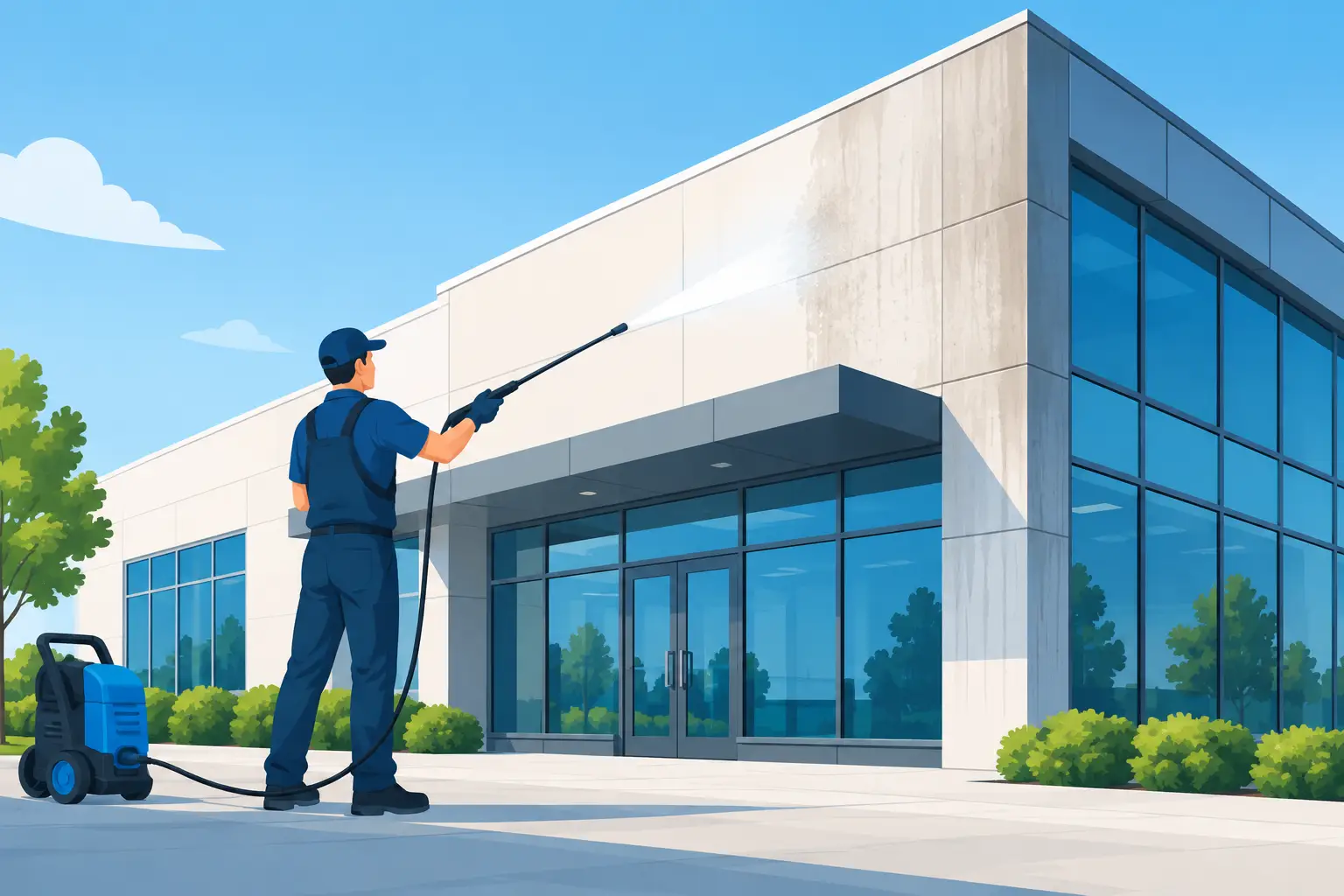
A commercial property can look neglected long before there is a major maintenance issue. Organic buildup on walkways, dark streaks on walls, grime around entrances, and stained concrete all affect how tenants, customers, and visitors experience the site. Commercial exterior cleaning addresses those visible conditions, but the right service starts with more than selecting a machine and setting a date. It starts with a confirmed scope.
For commercial sites, the details determine the plan. A small office entrance has different access, traffic, drainage, and surface needs than a retail center, restaurant patio, medical office, or managed residential community. Clear review before scheduling protects the property manager and the cleaning team from vague expectations, surprise charges, and work that does not match the actual site condition.
Commercial Exterior Cleaning Starts With a Defined Scope
A commercial cleaning request should identify the surfaces involved, the areas that need attention, site access conditions, and any timing limits. This is especially relevant in Central Florida, where humidity, rain, shade, irrigation overspray, and heavy foot traffic can create recurring buildup on concrete, stucco, pavers, sidewalks, dumpster pads, and entry areas.
“Exterior cleaning” can mean very different things from one property to another. One customer may need a front walkway and building facade cleaned before an inspection. Another may need common-area sidewalks, breezeways, patio surfaces, or pool-adjacent hardscape reviewed as part of routine property upkeep. A defined scope keeps those requests separate rather than treating every site as a standard package.
Before a price and appointment are confirmed, a proper review should account for the requested work, approximate square footage, surface material, staining, access points, water availability, parking or traffic concerns, and the presence of nearby landscaping, furniture, signage, or outdoor equipment. If the site includes restricted hours or requires coordination with tenants, that should be confirmed upfront as well.
Why Site Conditions Matter More Than a Generic Quote
Commercial decision-makers often need a number quickly, but a rushed quote can create more uncertainty than clarity. A price based only on a broad label such as “building wash” may not include the exact walls, walkways, entry features, or surrounding surfaces the customer expects to be cleaned.
A property-specific review is not unnecessary friction. It is how cleaning professionals determine the appropriate method and schedule the work responsibly. It also helps clarify what is outside the requested scope. For example, cleaning exterior pavers is different from repairing loose pavers, restoring damaged joints, removing embedded oil stains, or applying sealer. Those services should not be assumed to be included in a cleaning price.
Surface Material Changes the Cleaning Method
Not every exterior surface should receive the same pressure or treatment. Concrete sidewalks and durable hardscape may call for a different approach than painted siding, stucco, awnings, screen structures, coated metal, decorative stone, or delicate exterior trim.
Pressure washing can be appropriate for certain durable surfaces when the condition and material support it. Soft washing may be better suited to surfaces where high pressure could create damage or force water where it does not belong. Surface-specific cleaning may also involve pretreatment, controlled rinsing, or a staged approach around landscaping and occupied areas.
The trade-off is straightforward: aggressive cleaning may appear faster, but it is not always the safer or more effective choice. The goal is to select a method that fits the property, not to apply one method to every visible stain.
Access and Operations Affect Scheduling
Commercial exterior cleaning can interrupt normal site activity if access is not planned. Delivery lanes, customer parking, pedestrian routes, loading areas, outdoor dining sections, and tenant entrances may all affect when and how work can take place.
Some properties are best serviced during quieter hours. Others need work divided into sections so customers and staff can still enter safely. Water runoff, hose routing, gate access, and equipment staging also need attention. These operational details are why a commercial job should be reviewed before it is placed on a schedule.
What a Clear Commercial Scope Should Cover
A useful scope confirmation does not need to be complicated, but it should be specific enough that both sides know what will happen on service day. For most commercial sites, the confirmation should identify:
- The exact surfaces and areas requested for cleaning
- The access plan, including gates, parking, water access, and working hours
- Any visible conditions that may require special review, such as heavy staining or sensitive materials
- The quoted price, what it includes, and services that are not included
- The expected payment timing after completed work
This level of detail is particularly valuable for owners and managers who need to document maintenance decisions or communicate with tenants. It replaces assumptions with a record of what was requested and approved.
Pricing Should Reflect the Property, Not a Sales Package
Commercial sites vary too much for one-size-fits-all pricing to be reliable. The size of the cleaning area matters, but so do the number of surfaces, degree of buildup, access limitations, water availability, and whether the work must be completed in phases.
Custom pricing is not a reason for an unclear quote. The customer should understand why the service is priced as proposed and what the stated amount covers. If additional work is requested after the original scope is reviewed, it should be discussed separately rather than folded into the job without confirmation.
This is also where modular service is helpful. A property may need sidewalk cleaning now and facade cleaning later. It may need paver cleaning without sealing, or a focused entrance refresh rather than a full-site service. Packaging unrelated work into one offer can make comparison difficult and raise the upfront cost without solving the immediate problem.
CurbLuma coordinates select commercial exterior cleaning requests through property-specific review, with human support to confirm the address, requested work, access, and service details before scheduling. That approach is designed to reduce uncertainty, especially for sites that do not fit a published residential tier.
A Practical Process for Commercial Cleaning Requests
The most efficient booking process is one that gathers the right information early. Start by providing the property address, the areas you want cleaned, and clear photos when available. Photos can help identify visible buildup, surface type, access limits, and whether the request may need an on-site review before a final scope is confirmed.
Next, confirm site logistics. Include preferred service timing, contact information for day-of access, gate or parking instructions, and any areas that must remain open. If the property has tenant notices, insurance requirements, or facility rules, raise those before the service date rather than when the crew arrives.
Finally, review the proposed scope and payment terms before work begins. A low-upfront-payment model gives the customer more control because the remaining balance is paid after completed service. That does not eliminate the need for clear scheduling terms, but it does reduce the risk of paying in full before the work is performed.
How Often Should Commercial Exteriors Be Cleaned?
There is no single interval that fits every property. A shaded walkway near landscaping may develop organic growth faster than an open concrete lot. A busy storefront entrance may need attention more often than a rear service area. Pool-adjacent surfaces, outdoor gathering spaces, and high-visibility entry points also tend to need more regular review.
For many Orlando-area commercial properties, it makes sense to inspect visible exterior surfaces seasonally and schedule cleaning based on actual buildup, traffic, and appearance standards. Properties preparing for lease tours, inspections, events, or seasonal increases in visitors may have a more immediate need than those following a routine maintenance cycle.
Cleaning frequency should also account for the surface itself. Repeated staining can point to shade, drainage, irrigation, nearby vegetation, or traffic patterns that cleaning alone will not change. A professional can clean the current buildup, but the property manager may still want to address the underlying condition to extend the time between services.
A clear request, accurate site details, and a confirmed scope make commercial cleaning easier to manage. When the work matches the property’s actual needs and payment follows completed service, exterior maintenance becomes a practical decision instead of a vague estimate.