A travertine pool deck can look clean one week and develop dark organic film, leaf stains, or cloudy-looking traffic areas the next. In Central Florida, humidity, shade, irrigation overspray, and pool use create steady cleaning pressure on natural stone. Knowing how to clean travertine pool deck surfaces correctly matters because the wrong cleaner or pressure setting can leave permanent etching, color changes, or a rougher surface that holds dirt more easily.
Travertine is not concrete and should not be treated like it. It is a porous natural stone with small holes and channels, often filled during installation or left open for drainage and texture. A careful cleaning approach protects its finish while addressing the organic buildup that makes a pool area look neglected and can become slippery when wet.
Start by Identifying What Is Actually on the Stone
The best cleaning method depends on the condition of the deck. A light, dull film near seating areas may be sunscreen, body oils, airborne dirt, or residue from pool traffic. Green or black discoloration is often algae, mildew, or other organic growth. Brown marks under planters or near trees may be tannin stains from leaves, while white residue can be mineral buildup from hard water or splash-out.
These conditions do not all respond to the same product. Treating a waterline mineral deposit with a strong acidic cleaner, for example, may remove some residue while damaging the travertine itself. Similarly, using excessive pressure to remove algae may strip filler, enlarge natural pits, or leave visible cleaning lines.
Before applying anything across the deck, inspect a small, inconspicuous area. Look for cracked tiles or pavers, loose grout, missing filler, prior sealant problems, rust marks, and areas where runoff can enter the pool or planting beds. This quick review helps set a safer scope before cleaning begins.
What to Use to Clean Travertine
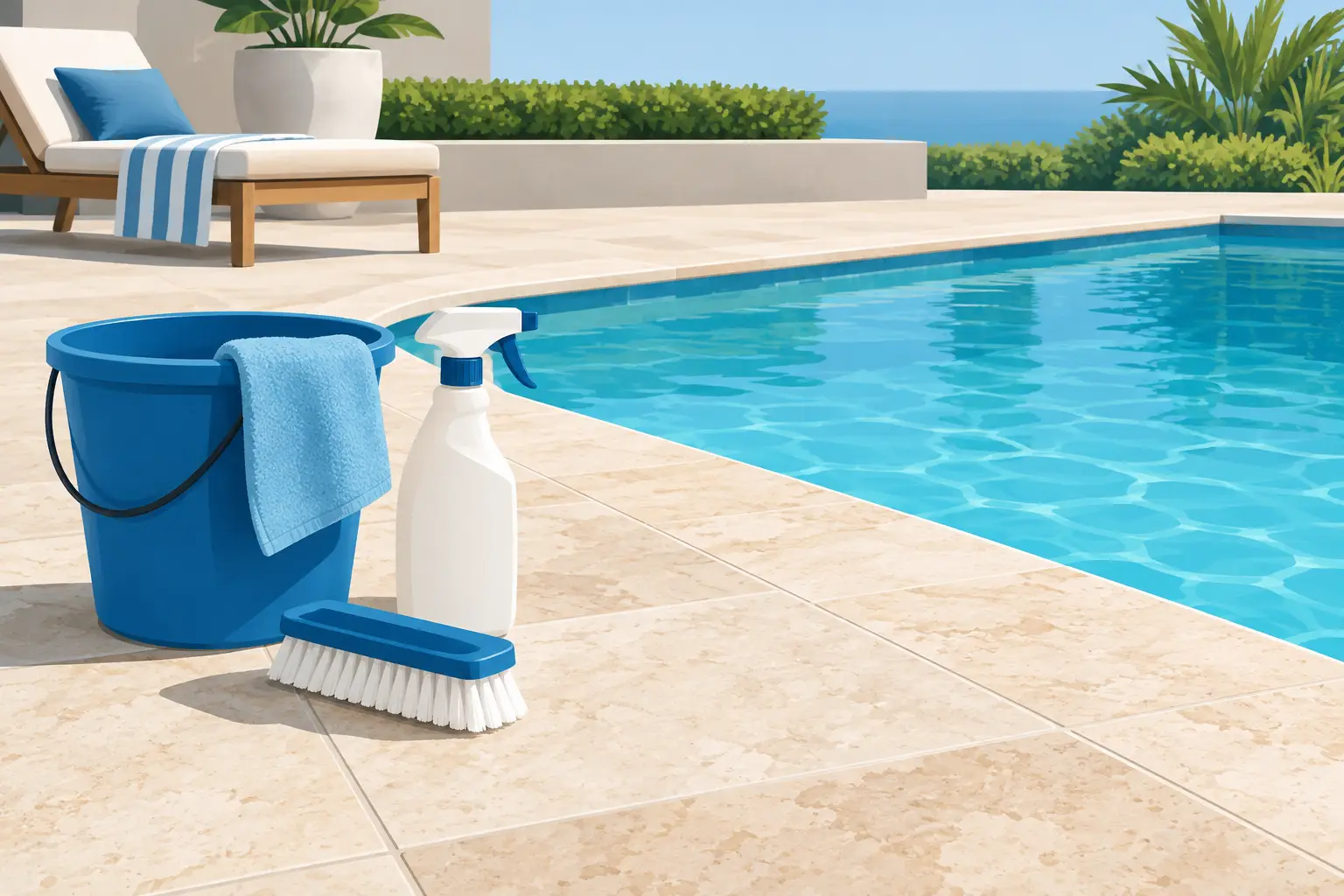
For routine soil and mild buildup, start with clean water, a pH-neutral cleaner labeled for natural stone, and a soft-bristle deck brush. Avoid wire brushes, abrasive pads, and household products that are not intended for stone. Travertine can scratch or etch more easily than many homeowners expect.
A garden hose with a controlled spray is usually enough for pre-rinsing and rinsing small areas. Work in manageable sections rather than applying cleaner to the entire deck at once. Keeping the surface wet during the cleaning process prevents products from drying into the stone, particularly during warm Orlando afternoons.
For visible organic growth, use a stone-appropriate cleaning treatment according to its label directions. Some professional cleaning methods use carefully diluted solutions to treat algae and mildew, but concentration, dwell time, nearby landscaping, pool protection, and surface condition all matter. A product that is acceptable for one stone installation may not be suitable for a deck with older filler, sensitive plant beds, or uncertain prior sealing.
Do not use vinegar, lemon juice, acidic bathroom cleaners, or products marketed for removing calcium without confirming they are safe for travertine. Acid can react with calcium-based natural stone, leaving a dull, etched appearance that cleaning alone will not reverse.
How to Clean a Travertine Pool Deck Step by Step
Begin by moving furniture, planters, toys, and loose items off the deck. Sweep away leaves, sand, and dry debris first. Dry debris becomes mud once water is introduced, and leaves left on wet travertine can contribute to staining.
Pre-wet the deck and any adjacent landscaping. The goal is not to flood the surface but to cool and rinse it so cleaning solution is less likely to absorb unevenly. If your deck drains toward the pool, be especially careful about what can reach the water.
Apply a pH-neutral stone cleaner as directed, then agitate lightly with a soft-bristle brush. Use overlapping passes and give extra attention to shaded corners, furniture footprints, and areas near screen enclosure edges where organic material tends to collect. Let the cleaner work only for the recommended dwell time. More time is not automatically better.
Rinse thoroughly with clean water. Incomplete rinsing can leave residue that attracts dirt or creates a patchy appearance after drying. If a section remains discolored, repeat the mild process once before escalating to a stronger treatment. That restraint is often what protects the stone.
Allow the deck to dry fully before returning furniture. Drying may reveal areas that need additional spot treatment, but it also gives you a more accurate view of whether the remaining mark is surface grime, a stain inside the stone, old sealer failure, or actual wear.
Pressure Washing Travertine: Use Caution
Many homeowners assume pressure washing is the fastest answer for a dirty pool deck. It can be useful in the right hands, but it is not a one-setting solution. High pressure, a narrow spray tip, or a wand held too close can scar the stone, dislodge filler, damage joints, and force water beneath loose material.
Professional cleaning is often better suited to low-pressure rinsing combined with the correct surface treatment, controlled dwell time, and light agitation. The cleaning chemistry should do most of the work, not aggressive pressure.
This is particularly relevant for older travertine, unfilled travertine, decks with visible pitting, or installations with uncertain maintenance history. A deck that has been sealed may also need a different approach than an unsealed deck. Sealer can wear unevenly, trap residue, or react poorly to an unsuitable cleaner.
If you hire a service provider, ask direct questions: Is the crew cleaning natural stone specifically? What cleaning method will they use? How will they protect the pool, screens, landscaping, and nearby painted surfaces? Will they review the condition of the stone and confirm the scope before starting? Clear answers matter more than a vague promise to make the deck look new.
Common Mistakes That Create Bigger Problems
The most costly travertine cleaning mistakes usually begin with products or equipment chosen for another surface. Concrete degreasers, acid washes, harsh rust removers, and untested bleach mixtures can create avoidable risk. Even a product that removes a stain can leave a lighter patch, etched finish, or damaged sealer behind.
Another common mistake is cleaning only when the deck looks severely soiled. Thick organic buildup takes more effort to remove and may require stronger treatment than routine maintenance. A light cleaning schedule is generally easier on natural stone than infrequent, aggressive restoration attempts.
Avoid assuming every dark area is mold or algae. Pool chemicals, metal furniture, fertilizer, leaf tannins, and water minerals can all stain differently. If the source is not clear, a small test area and a measured approach are safer than applying a stronger product across the full deck.
When Professional Pool Deck Cleaning Makes Sense
Professional help is worth considering when organic growth covers a large area, stains persist after gentle cleaning, the deck has loose filler or damaged joints, or the pool enclosure and surrounding surfaces need coordinated cleaning at the same time. It can also make sense when access, drainage, nearby plants, or pool protection complicate the work.
For homeowners who prefer not to guess at pressure or chemistry, a surface-specific review reduces uncertainty. CurbLuma coordinates pool deck cleaning with confirmed scope, helping homeowners distinguish between routine cleaning needs and conditions that may require a more careful assessment. Service coverage, access, and the condition of the stone should be reviewed before work is scheduled, rather than assumed from a general description.
A defined scope also helps prevent unwanted add-ons. Cleaning a travertine deck is different from sealing, repairing filler, removing embedded stains, or restoring an etched surface. Those are separate needs and should be discussed separately if they are relevant to the property.
Keep the Deck Easier to Clean Between Visits
A quick sweep after heavy leaf drop, regular removal of standing debris, and periodic rinsing of shaded areas can reduce the conditions that support organic growth. Keep planters slightly elevated when possible, and watch irrigation heads that repeatedly spray the same section of stone. Excess water and fertilizer runoff can leave localized discoloration.
If you use pool furniture with metal feet, check for early rust transfer after rainy periods. Addressing a small mark promptly is usually more manageable than letting it sit through a full season of heat and humidity.
A clean travertine deck should still look like natural stone, with its variation, pores, and texture intact. The goal is not to force a uniform, artificial finish. It is to remove buildup carefully, preserve the material, and keep the pool area comfortable and safe to use.